Reminder – Deadline for Tony Slaven Doctoral Workshop approaching

Call for Papers: Tony Slaven Doctoral Workshop in Business History, 29 June 2022 

Newcastle Business School, Northumbria University Newcastle. 

The ABH will hold its tenth annual Tony Slaven Doctoral Workshop on 29 June 2023. This event immediately precedes the 2023 ABH Annual Conference at Newcastle Business School, Northumbria University. The full call for papers can be found here: https://www.theabh.org/conferences. Participants in the Workshop are encouraged to attend the main ABH Annual Conference following the Workshop. They will also have an opportunity to participate in the Poster Competition (explained in the main call for papers). The Workshop is an excellent opportunity for doctoral students to discuss their work with other research students and established academics in business history in an informal and supportive environment. It is important to note that this will not be a hybrid event and all participants need to attend the workshop in person. Students at any stage of their doctoral studies, whether in their first year or very close to submitting, are urged to apply. In addition to providing new researchers with an opportunity to discuss their work with experienced researchers in the discipline, the Workshop will also include at least one skill-related session. The Workshop interprets the term ‘business history’ broadly, and it is intended that students in areas such as (but not confined to) the history of management and organizations, international trade and investment, financial or economic history, agricultural history, the history of not-for- profit organisations, government-industry relations, accounting history, social studies of technology, and historians or management or labour will find it useful. Students undertaking topics with a significant business history element but in disciplines other than economic or business history are also welcome. We embrace students researching any era or region of history. Skills sessions are typically led by regular ABH members; in the past these have included ‘getting published’, ‘using historical sources’, and ‘preparing for your viva examination’ sessions. There will be ample time for discussion of each student’s work and the opportunity to gain feedback from active researchers in the field. 

How to Apply for the Tony Slaven Workshop 

Your application should be no more than 4 pages sent together in a single computer file: 1) a one-page CV; 2) one page stating the name(s) of the student’s supervisor(s), the title of the theses (a proposed title is fine), the university and department where the student is registered and the date of commencement of thesis registration; 3) an abstract of the work to be presented. 

If selected for the workshop, you will be asked to prepare a 15-minute presentation that is either a summary of your PhD project (giving an overview of the overarching themes, research questions, and methodologies) or a chapter/paper. 

You may apply via email to Dr Michael Aldous at m.aldous@qub.ac.uk. Please use the subject line “Tony Slaven Workshop” and submit by 24 March 2023

Call for Papers: Slavery, Institutions, and Empire – Moving Beyond Microhistory

Slavery, Institutions, and Empire: Moving Beyond Microhistory

The past few years have witnessed a wave of new studies that explore the relationships between specific institutions and the colonial past. The institutions encompassed within this burgeoning field include higher education establishments, hospitals, museums, corporations, and country houses.

This new generation of studies has produced a great deal of knowledge regarding the specific institutions in question. Yet, because of the way in which these projects have been conceived and funded, they rarely offer the opportunity to reflect on what these institutional histories might mean in the wider context of British domestic and imperial history.

This conference seeks to move beyond those individual microhistories, using them to shed light on bigger questions. What is the significance of individual research projects beyond that for the institution in question? How can these histories be integrated into the wider field? What can they tell us about the development of empire, Britain, colonialism, etc.?

We invite proposals for individual papers or panels that address larger issues raised by recent and current projects on British institutions and slavery, as well as other colonial connections. Papers may be centred on research projects about a particular institution, but may also range more widely. The issues we seek to explore include, but are not limited to, the following topics:

  • Methodological and theoretical approaches: what can we take from institutional microhistories and apply elsewhere?
  • Comparative histories: does putting individual histories alongside each other tell us something new about institutional development, patterns in imperial expansion, etc.?
  • Histories and Historiographies of Empire: can these new histories shed light, question, or refine ideas about established historiographical concepts like the imperialism of free trade, gentlemanly capitalism, or the new imperial history?
  • Core-and-periphery dynamics and the relationship between colonies and colonizers: did institutions and individuals located at certain places in the core-periphery axis experience empire differently? Were there particular dynamics or relationships that apply to places like Scotland, Wales, or Ireland that do not apply to England?
  • Business and economic history; histories of capitalism; histories of labour
  • Imperial networking and networks
  • Institutions and the construction of knowledge
  • Social and geographic mobility
  • Regional patterns of imperial participation
  • Histories of philanthropy

This day and a half-day conference will allow participants to engage with these issues, new research in the field, and with other researchers. It will conclude with a roundtable discussion.

We will meet on 7 and 8 September 2023 at Brasenose College, Oxford for an in-person conference. Participants should be committed to attend all panels.

We particularly welcome proposals from post-graduate research students and ECRs.

Funding will be available for travel and accommodation costs for speakers. Meals will be provided.

To propose a paper, please send an abstract of up to 250 words and a one-page CV by April 15, 2023, to hunter.harris@nuffield.ox.ac.uk.

To propose a panel, please send to the same address a single document, labelled with the first initial and surname of the contact person (e.g., “SmithJ2023”), by April 15, 2023. The document should contain:

  • Panel title and one-paragraph description of panel topic, including a brief rationale that connects the papers
  • Title and 200-word abstracts for 3-4 papers
  • Email addresses and institutional affiliations (if applicable) for all participants
  • One-page CVfor each participant
  • Panel submissions may include a chair/commenter but do not need to do so

Questions about the conference may be directed to Hunter Harris (hunter.harris@nuffield.ox.ac.uk)

LUSTRE event: AI & born digital archives

Adam Nix and Stephanie Decker recently took part in a fascinating workshop on digital archives at the Cabinet Office in London, organized by the fantastic LUSTRE network. The overall aim of the LUSTRE project is to connect policymakers with Computer Scientists, Digital Humanists and professionals in the GLAM sector (Galleries, Libraries, Archives and Museums). The project is co-delivered with professionals from the Cabinet Office’s Central Digital and Data Office (CDDO). The recordings from the day are available here.

We talked about our recent paper in AI & Society: Finding light in dark archives: Using AI to connect context and content in email. The practice of digital archival discovery is still emerging, and the approaches future research will take when using digital sources remain unclear. Archival practice has been shaped by paper-based, pre-digital sources and guides assumptions around how researchers will access and make use of such collections. Paradoxically, dealing with the increasing relevance of born-digital records is not helped by the fact that many born-digital collections remain dark, in part while questions of how they should be effectively made available are answered. Our research takes a user perspective on discovery within born-digital archives and seeks to promote more meaningful access to born-digital archives for researchers. In doing so, our work deals with the implications that unfamiliar archival technologies (including artificial intelligence) have on disciplinary traditions in the humanities and social science, with a specific focus on historical and qualitative approaches.

Our work in this area currently focuses on the issue of context within organisational email, and the challenges of searching and interpreting large bodies of email data. We are particularly interested in how effective machine-assisted search and multiple pathways for discovery can be used to open contextually opaque collections. Such access is likely to leverage a collection’s structural and content characteristics, as well as targeted archival selection and categorisation. We ultimately suggest that by combining relatively open user-led interfaces with pre-selective material, digital archives can provide environments suited to both the translation of existing research practices and the integration of more novel opportunities for discovery. Our presentation will summarise our progress in this area and reflect on the technical and methodological questions our work here has raised.

CfP – Workshop on British commercial entertainment industries

New approaches to British commercial entertainment industries during the 20th century

Call for papers for this one-day workshop

Centre for Economic Institutions and Business History (CEIBH)

Henley Business School, University of Reading, UK

Submission date: 31 March 2023

This one-day workshop, scheduled for September 2023, will explore new approaches to the economic, business, and social history of the British commercial entertainment sectors over the 20th century, focusing on new approaches (especially regarding sources). Commercial entertainment was one of the most closely-monitored industries by government – especially from 1915-1960, owing to the importance of “entertainment duty,” a tax on admissions, which led HM Customs & Excise to compile extensive quantitative and qualitative data on the health of the main commercial entertainments (including spectator sports). This included commissioning the Government Social Survey to monitor both the frequency, cost, and age composition of customers for venue-based entertainments. Other under-used data include the Family Expenditure Survey (and its predecessors) and data compiled by commercial surveying companies.

We would welcome paper proposals on all mainstream commercial entertainments, including theatres, cinema, commercial sports, dancing, venue-based gambling (such as bingo), exhibitions and festivals. We would also welcome papers examining the impacts of new entertainments on incumbent commercial entertainment formats. Ideally, proposals should be “work-in progress” papers, rather than finished work, so that the workshop can contribute to improving the papers. There is no registration fee and we hope to be able to reimburse the admission costs for the presenters. For further information, please contact Peter Scott (IBS, Henley Business School at the University of Reading): p.m.scott@reading.ac.uk For full consideration, papers should be submitted prior to 31st March 2023.

Alfred P Sloan Foundation Research Funding

Call for Letters of Inquiry: Historical Research on the Practices and Institutions of Social and Natural Science

Submission Deadline: Thursday, March 16, 2023

Grants of $75,000 – $250,000 to be awarded for original research in the history of science, technology, economics, and social science, focusing on areas of broad programmatic interest to the Alfred P. Sloan Foundation

Overview

The Alfred P. Sloan Foundation supports basic research and public understanding of science, technology, and economic behavior. We believe that historical scholarship is valuable to understand the contemporary context of scientific research and that historical scholarship can be critically important to informing current and future research and policy practices. The Sloan Foundation is currently soliciting Letters of Inquiry for research projects to advance historical scholarship on thematic areas of interest to the Foundation as discussed below. A small number of full proposals will be invited based on submissions received in response to this Call.

Letters of Inquiry are invited between $75,000 – $250,000 and can be for the following types of research projects:

  • Faculty-led research projects of up to $250,000, with the aim of advancing original scholarship on a topic or theme of interest to the Foundation in the history of science, technology, economics, and social science
  • Dissertation improvement and completion projects of up to $75,000, to specifically support dissertation research expenses including travel, archival fees, and data collection, and up to one year of graduate student stipend (including summer funding, but not tuition) on a topic or theme of interest to the Foundation in the history of science, technology, economics, and social science. A faculty member must serve as the principal investigator for dissertation improvement and completion projects.

Themes and Topics of Interest

Through this Call for Letters of Inquiry, the Sloan Foundation is focused on advancing historical scholarship on the practices and institutions of natural and social science, engineering, and technology in order to better understand and strengthen the research enterprise. 

Themes of interest include but are not limited to: the changing nature of interdisciplinary research and collaborative team structures; the role of instrumentation, data, and computational tools within and across disciplines; the changing nature of research organizations; the formation and development of professional societies, conferences, and scholarly communication systems; the establishment and evolution of fellowship and training programs; and the formation and development of research funding agencies. These themes are directly related to some of the Foundation’s current programmatic and strategic interests. Cutting across all topics and thematic areas is an interest in examining issues related to diversity, equity, and inclusion and illuminating the role played by under-represented scholars and perspectives in the advancement and development of these areas.

Projects are expected to be predominantly focused on the United States, with a particular focus on the 20thand 21stCenturies. While broadly interested in the history of the natural and social sciences, engineering, and technology, we especially encourage projects that relate to current areas of grantmaking or previously completed programs.

Expected Research Approach and Outputs

  • Proposed projects are expected to involve historically oriented archival, oral history, or other documentary research and analysis techniques.
  • Research outputs expected to include scholarly works including monographs, articles, and dissertations.
  • Other outputs may include reports, workshops and other convenings, or presentations that share historical scholarship with scholars and practitioners.

Expected Team Structure and Eligibility

  • Lead principal investigator must be a faculty member either based at a United States university or college or working through an existing 501(c)(3) fiscal sponsor organization.
  • A faculty member must serve as the principal investigator for dissertation improvement and completion projects.
  • Submissions from diverse teams led by Black, Indigenous, and Latina/o researchers and/or women are strongly encouraged. Submissions from researchers based at Minority Serving Institutions (MSIs) are strongly encouraged.
  • Projects involving advocacy or lobbying activities are out of scope and not eligible for consideration.
  • Researchers may participate in a maximum of two proposed projects.

Submission Deadline

Letter of Inquiry submissions are due on Thursday, March 16, 2023, by 5:00pm Eastern.

Submission materials should be uploaded directly to the application portal at https://apply.sloan.org/prog/history_of_science/. Any questions related to the application portal can be sent to energy@sloan.org.

Submission Components

Complete submissions should include 5 components in the following order:

(1) 1-page Sloan Foundation Proposal Cover Sheet, summarizing key project details. Projects should have a proposed start date of September 1, 2023. The Proposal Cover Sheet is available at: https://sloan.org/proposal-cover-sheet

(2) Letter of Inquiry 3-4 pages in length (excluding budget table and other supplemental material)in 11-point font. Submissions should address the following questions, with each question serving as a section heading:

  1. What is the primary topic and what are the guiding research question(s)?
  2. What is the landscape of work in this area and what gap(s) will this research address?
  3. What are the archival collections or other resources on which the work will draw?
  4. Who are the key members of the research team?
  5. What is the project timeline, and what are its expected outputs?

The first and second sections should be roughly a page in length each, with the other sections being shorter in length.

(3) Budget Table for the proposed project. Total funding requests are allowed up to $250,000, with sub-awards to collaborating institutions allowed where appropriate. A sample Budget Table is available at: https://sloan.org/grants/apply#tab-grant-forms. Allowable expenses include:

  1. For faculty: up to two-months summer salary per investigator per year, plus benefits, capped at $35,000 per investigator per year, based on project time commitments. In addition, sabbatical support will be considered on a case-by-case basis.
  2. For graduate students, postdoctoral researchers, or undergraduate students: salary/stipend, plus benefits, based on project time commitment.
  3. Tuition reimbursement: Requests for graduate student tuition reimbursement are allowed up to a maximum of $12,000 per student per academic year, with justification provided.
    • Tuition is not an allowable expense for dissertation improvement and completion grants.
  4. For project-related administrative and research staff: salary, plus benefits.
  5. Research implementation expenses: data acquisition, archive fees, travel, computing, transcription, and other direct research expenses.
  6. Dissemination and presentation expenses: travel, meals, lodging, conference fees, room rentals, speaker stipends, audio-visual equipment, and other dissemination expenses.
  7. Indirect overhead expenses, capped at 20% of direct costs (overhead expenses are not allowed on tuition reimbursement).

(4) References/Bibliography List of up to one additional page

(5) Brief CVs of key project leads and personnel (no more than 2 pages per person)

Submission Review Process

Given the large number of expected submissions, we will be unable to discuss the details of any potential submissions in advance. Following initial review, a small number of selected submissions will then be invited to prepare full proposals for consideration. Depending on the number of submissions received, it is expected that 4-8 grants may be awarded, with award decisions expected by August 2023.

About the Alfred P. Sloan Foundation

The Alfred P. Sloan Foundation is a nonpartisan not-for-profit, grantmaking institution dedicated to improving the welfare of all through the advancement of scientific knowledge. Established in 1934 by Alfred Pritchard Sloan Jr., then-President and Chief Executive Officer of the General Motors Corporation, the Foundation makes grants in four broad areas: direct support of research in science, technology, engineering, mathematics, and economics; initiatives to increase the quality and diversity of scientific institutions and the science workforce; projects to develop or leverage technology to empower research; and efforts to enhance and deepen public engagement with science and scientists.

sloan.org | @SloanFoundation

Seminar at the German Studies Association annual conference, Montreal, Canada

CfA: GSA Seminar “Made in Germany: Myths and Materiality of an Exporting Nation

Date: 5-8 October 2023

Deadline: 3 March 2023, 11:59 PST

How to apply: https://thegsa.secure-platform.com/47/

Convenors: William Glenn Gray (Purdue) and Katrin Schreiter (King’s College London)

This seminar will take place at the German Studies Association annual conference in Montreal, 5-8 October 2023. It invites participants to consider the centrality of export activity to society, culture, and politics in the German-speaking lands. Long before the “Made in Germany” label was affixed to products, trade fairs were a feature of German economic life; and the 19th and 20th centuries brought an even greater concentration on production for export. How did orientation toward distant markets inflect business innovation, product design, foreign relations, and political priorities? How did concerns about market share shape currency alignments, labor practices, and the domestic economy? What histories can be told about the lives of German commercial agents abroad, and what narratives did Germans craft about their most iconic exports? And how did German products impact societies abroad? The conveners welcome contributions from design history, material culture, business history, labor history, and beyond. Our goals are to reinvigorate the salience of economic themes within the GSA and to publish proceedings.

Participants will prepare brief research-based contributions (ca. 10 double-spaced pages) in response to the seminar’s guiding themes and prescribed readings. Each morning the seminar will discuss a selection of their pre-circulated contributions in a roundtable format. Completed seminar contributions are due September 5. The prospects for the publication of expanded seminar papers, whether as an edited volume or a journal special issue, will feature in the seminar’s closing discussion.

See also: https://thegsa.org/blog/cfa-seminar-participant-applications-gsa-2023#15.%20Exporting

If you have any questions about the seminar theme or the fit of your potential contribution, please contact Katrin Schreiter (katrin.schreiter@kcl.ac.uk).

Hagley Seminar on Business, Culture & Politics

Building on the long legacy of the Hagley Research seminar, the Hagley Seminar on Business, Culture, and Politics features original and creative work-in-progress essays that make use of business history sources. 

All seminars are held on Zoom between noon and 1:30 p.m. Eastern USA time. Seminars are based on a paper that is circulated in advance. Preregistration is required and space is limited. To find registration links as well as additional information on the seminars, please go to https://www.hagley.org/research/research-seminars. Questions may be sent to Carol Lockman, clockman@Hagley.org

2023 Spring Seminar Series

February 22, noon-1:30

Moeko Yamazaki, University of Oregon

“Making the World on Time: The Vietnam War, Deregulation and the Birth of FedEx”

Comment: Marc Levinson, Independent Scholar

April 5, noon-1:30

Angus McLeod, University of Pennsylvania

“Schools and Economic Development in Antebellum Texas”

Comment: John Majewski, University of California, Santa Barbara

May 3, noon-1:30

Brent Cebul, University of Pennsylvania

 “Creating the Intern: Philanthropy, Universities, and the New Deal”

Comment: Elizabeth Tandy Shermer, Loyola University of Chicago

TOC Business History

Issue 65 – 1, 2023

Bamforth, Catherine Jill, and Malcolm Abbott. “Comparing Private and Public Approaches to State Megaproject Implementation: The R100-R101 Airship Development Case Study.” Business History 65, no. 1 (January 2, 2023): 131–56. https://doi.org/10.1080/00076791.2020.1806823.

David, Geraldine, Christian Huemer, and Kim Oosterlinck. “Art Dealers’ Inventory Strategy: The Case of Goupil, Boussod & Valadon from 1860 to 1914.” Business History 65, no. 1 (January 2, 2023): 24–55. https://doi.org/10.1080/00076791.2020.1832083.

Fletcher, Marie M. “Death and Taxes: Estate Duty – a Neglected Factor in Changes to British Business Structure after World War Two.” Business History 65, no. 1 (January 2, 2023): 187–209. https://doi.org/10.1080/00076791.2021.1892642.

Herrero, Marta, and Thomas R. Buckley. “Collaborating Profitably? The Fundraising Practices of the Contemporary Art Society, 1919–1939.” Business History 65, no. 1 (January 2, 2023): 1–23. https://doi.org/10.1080/00076791.2020.1805436.

Maréchaux, Benoît. “Business Organisation in the Mediterranean Sea: Genoese Galley Entrepreneurs in the Service of the Spanish Empire (Late Sixteenth and Early Seventeenth Centuries).” Business History 65, no. 1 (January 2, 2023): 56–87. https://doi.org/10.1080/00076791.2020.1798933.

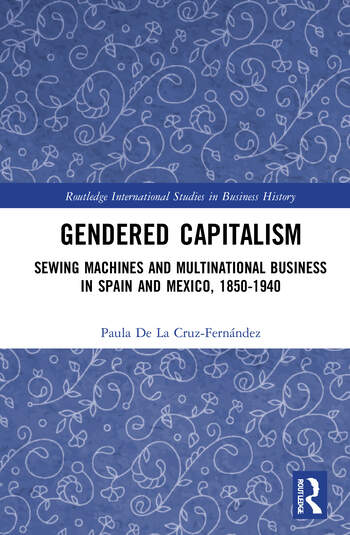
[book review] Martínez-Rodríguez, Susana. “Gendered Capitalism. Sewing Machines and Multinational Business in Spain and Mexico (1850–1940).” Business History 65, no. 1 (January 2, 2023): 210–11. https://doi.org/10.1080/00076791.2021.1995173.

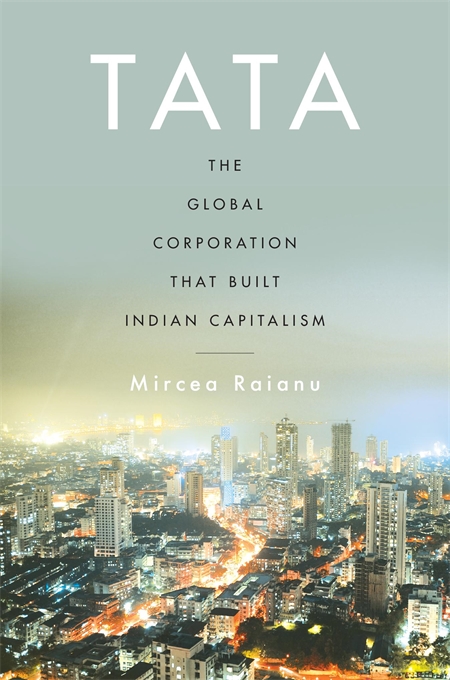
[book review] Masrani, Swapnesh. “Tata: The Global Corporation That Built Indian Capitalism.” Business History 65, no. 1 (January 2, 2023): 212–13. https://doi.org/10.1080/00076791.2021.1995179.

Oskar, Glenda. “Assessable Stock and the Comstock Mining Companies.” Business History 65, no. 1 (January 2, 2023): 157–85. https://doi.org/10.1080/00076791.2020.1807951.

[book review] Raman, Alka. “The English East India Company’s Silk Enterprise in Bengal, 1750–1850.” Business History 65, no. 1 (January 2, 2023): 214–15. https://doi.org/10.1080/00076791.2021.2001055.

Romano, Maurizio. “‘The Originator of Eni’s Ideas’. Marcello Boldrini at the Top of Agip/Eni (1948–1967).” Business History 65, no. 1 (January 2, 2023): 88–112. https://doi.org/10.1080/00076791.2020.1789101.

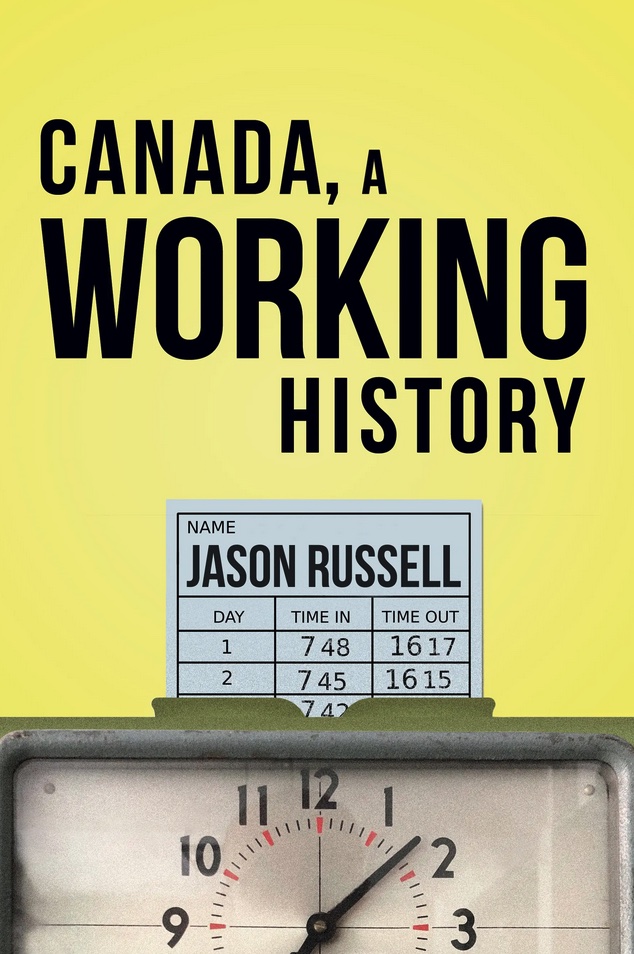
[book review] Scott, Peter. “Canada, a Working History.” Business History 65, no. 1 (January 2, 2023): 216–17. https://doi.org/10.1080/00076791.2021.2009639.

Wegenschimmel, Peter, and Andrew Hodges. “The Embeddedness of ‘Public’ Enterprises: The Case of the Gdynia (Poland) and Uljanik (Croatia) Shipyards.” Business History 65, no. 1 (January 2, 2023): 113–30. https://doi.org/10.1080/00076791.2020.1796975.

For news (such as the thread below) and insights about Business History, follow us on Twitter and LinkedIn.

Four #bookreviews published in the latest issue of @BH__journal #bizhis #newbooks
Thread 👇

. @sumaro76 on @cruzmosu‘s 𝐺𝑒𝑛𝑑𝑒𝑟𝑒𝑑 𝐶𝑎𝑝𝑖𝑡𝑎𝑙𝑖𝑠𝑚 @routledgebooks

Swapnesh Masrani on Mircea Raianu’s 𝑇𝑎𝑡𝑎 @Harvard_Press

Alka Raman on Karolina Hutkova’s 𝑇ℎ𝑒 𝐸𝑛𝑔𝑙𝑖𝑠ℎ 𝐸𝑎𝑠𝑡 𝐼𝑛𝑑𝑖𝑎 𝐶𝑜𝑚𝑝𝑎𝑛𝑦’𝑠 𝑠𝑖𝑙𝑘 𝑒𝑛𝑡𝑒𝑟𝑝𝑟𝑖𝑠𝑒 𝑖𝑛 𝐵𝑒𝑛𝑔𝑎𝑙, 1750–1850 @boydellbrewer

Peter Scott on Jason Russell ‘s 𝐶𝑎𝑛𝑎𝑑𝑎, 𝑎 𝑤𝑜𝑟𝑘𝑖𝑛𝑔 ℎ𝑖𝑠𝑡𝑜𝑟𝑦 @dundurnpress

Originally tweeted by businesshistory (@BH__journal) on January 12, 2023.

HiMOS workshop in Helsinki

Dear Colleagues,

Consider joining us for the next HiMOS workshop (www.historymos.com) in Helsinki. The seminar series aims at promoting historical methods in management and organization studies and workshops history-informed papers for publication in top management journals. 

Location: Suomenlinna, Helsinki

Time: Friday, March 3, 2023 (full day, including dinner in the city)

Register here (DL: February 17)

Participation fee: Free of charge! We are grateful for the financial support of Jyväskylä School of Business and Economics (JSBE).

We are excited to welcome Dan Raff (Wharton) for a keynote, distinguished commentators, and authors of papers aimed at journals, such as JMS, JIBS, SMJ, and Org Studies. 

Speakers: Dan Raff (Wharton), Mirva Peltoniemi (JSBE), Christopher Hartwell (ZHAW), Saara Matala (Chalmers), Sandeep Pillai (Bocconi), & Rolv Petter Amdam (BI)

Commentators: Rebecca Piekkari (Aalto), Tanja Leppäaho (LUT), Robin Gustafsson (Aalto), t.b.d.

Organizers: Christian Stutz (JSBE), Nooa Nykänen (Aalto), & Zeerim Cheung (Sydney)

Please forward this invitation to anyone who might have an interest in participating. 

We hope to see you at Suomenlinna!

Kind regards,

The organizers

Business History: Call for submissions for Special Issue on power and influence

Historical perspectives on business power and influence

In this video, guest editors Susanna Fellman and Maiju Wuokko explain what this call for submissions and Special Issue are expecting to accomplish.

Deadline for submissions is March 31, 2023.

More info here.