Call for Papers: Slavery, Institutions, and Empire – Moving Beyond Microhistory

Slavery, Institutions, and Empire: Moving Beyond Microhistory

The past few years have witnessed a wave of new studies that explore the relationships between specific institutions and the colonial past. The institutions encompassed within this burgeoning field include higher education establishments, hospitals, museums, corporations, and country houses.

This new generation of studies has produced a great deal of knowledge regarding the specific institutions in question. Yet, because of the way in which these projects have been conceived and funded, they rarely offer the opportunity to reflect on what these institutional histories might mean in the wider context of British domestic and imperial history.

This conference seeks to move beyond those individual microhistories, using them to shed light on bigger questions. What is the significance of individual research projects beyond that for the institution in question? How can these histories be integrated into the wider field? What can they tell us about the development of empire, Britain, colonialism, etc.?

We invite proposals for individual papers or panels that address larger issues raised by recent and current projects on British institutions and slavery, as well as other colonial connections. Papers may be centred on research projects about a particular institution, but may also range more widely. The issues we seek to explore include, but are not limited to, the following topics:

  • Methodological and theoretical approaches: what can we take from institutional microhistories and apply elsewhere?
  • Comparative histories: does putting individual histories alongside each other tell us something new about institutional development, patterns in imperial expansion, etc.?
  • Histories and Historiographies of Empire: can these new histories shed light, question, or refine ideas about established historiographical concepts like the imperialism of free trade, gentlemanly capitalism, or the new imperial history?
  • Core-and-periphery dynamics and the relationship between colonies and colonizers: did institutions and individuals located at certain places in the core-periphery axis experience empire differently? Were there particular dynamics or relationships that apply to places like Scotland, Wales, or Ireland that do not apply to England?
  • Business and economic history; histories of capitalism; histories of labour
  • Imperial networking and networks
  • Institutions and the construction of knowledge
  • Social and geographic mobility
  • Regional patterns of imperial participation
  • Histories of philanthropy

This day and a half-day conference will allow participants to engage with these issues, new research in the field, and with other researchers. It will conclude with a roundtable discussion.

We will meet on 7 and 8 September 2023 at Brasenose College, Oxford for an in-person conference. Participants should be committed to attend all panels.

We particularly welcome proposals from post-graduate research students and ECRs.

Funding will be available for travel and accommodation costs for speakers. Meals will be provided.

To propose a paper, please send an abstract of up to 250 words and a one-page CV by April 15, 2023, to hunter.harris@nuffield.ox.ac.uk.

To propose a panel, please send to the same address a single document, labelled with the first initial and surname of the contact person (e.g., “SmithJ2023”), by April 15, 2023. The document should contain:

  • Panel title and one-paragraph description of panel topic, including a brief rationale that connects the papers
  • Title and 200-word abstracts for 3-4 papers
  • Email addresses and institutional affiliations (if applicable) for all participants
  • One-page CVfor each participant
  • Panel submissions may include a chair/commenter but do not need to do so

Questions about the conference may be directed to Hunter Harris (hunter.harris@nuffield.ox.ac.uk)

CfP – Workshop on British commercial entertainment industries

New approaches to British commercial entertainment industries during the 20th century

Call for papers for this one-day workshop

Centre for Economic Institutions and Business History (CEIBH)

Henley Business School, University of Reading, UK

Submission date: 31 March 2023

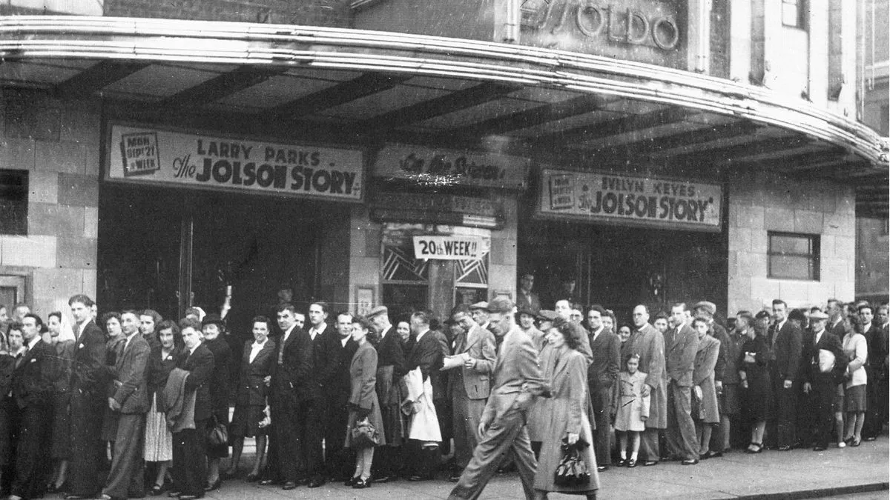
This one-day workshop, scheduled for September 2023, will explore new approaches to the economic, business, and social history of the British commercial entertainment sectors over the 20th century, focusing on new approaches (especially regarding sources). Commercial entertainment was one of the most closely-monitored industries by government – especially from 1915-1960, owing to the importance of “entertainment duty,” a tax on admissions, which led HM Customs & Excise to compile extensive quantitative and qualitative data on the health of the main commercial entertainments (including spectator sports). This included commissioning the Government Social Survey to monitor both the frequency, cost, and age composition of customers for venue-based entertainments. Other under-used data include the Family Expenditure Survey (and its predecessors) and data compiled by commercial surveying companies.

We would welcome paper proposals on all mainstream commercial entertainments, including theatres, cinema, commercial sports, dancing, venue-based gambling (such as bingo), exhibitions and festivals. We would also welcome papers examining the impacts of new entertainments on incumbent commercial entertainment formats. Ideally, proposals should be “work-in progress” papers, rather than finished work, so that the workshop can contribute to improving the papers. There is no registration fee and we hope to be able to reimburse the admission costs for the presenters. For further information, please contact Peter Scott (IBS, Henley Business School at the University of Reading): p.m.scott@reading.ac.uk For full consideration, papers should be submitted prior to 31st March 2023.

MOH SI on Microhistory

Management & Organizational History 

Special Issue Call for Papers 

Microhistory in Management History and Organization Theory 

Guest Editors 

  • Liv Egholm, Copenhagen Business School, le.bhl@cbs.dk 
  • Michael Heller, Brunel Business School, Michael.Heller@brunel.ac.uk 
  • Michael Rowlinson, University of Exeter Business School, m.c.rowlinson@exeter.ac.uk 

Submission September 1st, 2023 

There has been a resurgence of interest in microhistory. The classic texts associated with the subject remain immensely popular: The Cheese and the Worms (Ginzburg, 1992[1976]); The Return of Martin Guerre (Zemon Davis, 1983); and The Great Cat Massacre (Darnton, 1984). These provide a reference point, which has provided the basis for increasing reflection on the theoretical significance and methodological distinctiveness of microhistory (Magnússon & Szijártó, 2013), such as the special issue of Past and Present on ‘Global History and Microhistory’ (Ghobrial, 2019). Attention has also been paid to microhistory from management and business history as well as organization studies (Bourguignon & Floquet, 2019; Decker, 2015). Lately a recent article in Academy of Management Review has suggested that microhistory can help management and organization scholars paying attention to events and actions whose consequences unfold over years, challenging existing “macro” theories of continuity and change (Hargadon & Wadhwani, 2022). 2 

Microhistory offers an opportunity to reconceptualise relationships which lie at the heart of historical research and historiography: the historical nexus between the particular and the general, agency and structure, the micro and the macro. Microhistorians are known for their methodological habit of reading sources forensically in their search for historical clues. It implies reading historical sources ‘against the grain’ (Decker & McKinlay, 2020, pp. 26-27), or as Levi (2019: 41) puts it, ‘beyond the edge of the page’, carefully looking for what Ginzburg refers to as “unintended evidence” (Ginzburg, 2016). The use of microhistory as a magnifying glass can be seen as the equivalent of a detective’s tool. Sherlock Holmes´ working methods are often used as a metaphor for microhistory’s careful readings and detection of clues (Ginzburg, 2013 (1979)), often within “exceptional normal” cases (Grendi, 1977). 

For this reason, the trademark of microhistorical methodology is to trace sources and clues throughout and across archives (Ginzburg, 2013). The names of actors, places, concepts, events, or objects are used as concrete entry points to show how previously unrelated spaces, temporalities, and fields are woven together in practice. This mapping demonstrates great potential in revealing unnoticed relations between, for example, family life and entrepreneurship (Popp & Holt, 2013), religious practices and trade (Trivellato, 2019), or philanthropic gift giving and the establishment of the welfare state (Egholm, 2021). 

The purpose is not to argue for the universal value of the exceptional; it is to show, rather, how discrete historical events challenge our conceptualisations of the universal, and provide essential clues to what can be considered as normal (Ginzburg, 1979; Peltonen, 2001). Accordingly, the reduction of scale is not the study of the “microness” of a phenomenon (Levi, 2019, p. 38). The reduction of scale, rather, provides the historian with a heuristic tool to craft new theories by distorting or amending metanarratives and reformulating historical concepts and relations (see also Hargadon & Wadhwani, 2022). Without explicitly mentioning microhistory, a series of organizational phenomena have been reconceptualized 3 

from a close reading of sources, with notable examples being the career (McKinlay, 2002), and entrepreneurship (Popp & Holt, 2013. Thus, microhistory shows how, “history is a discipline of general questions and ‘local’ answers” (Levi, 2019, p. 45). 

The historic turn (Rowlinson, Hassard, & Decker, 2014) has pushed for a revised understanding of past context as offering more than simply temporal variables for universal theorising (Van Lent & Durepos, 2019). Historical phenomena often remain, however, reduced to consequences or affectations of particular contexts. In contrast, microhistory calls out for a grounding and explanation of the past through analyses of how actors, places, concepts, events or objects interact and are woven together in contradictory and often different fields and interests. In so doing, microhistory exposes how both individuals and social structures of all kinds are produced simultaneously through relationships and processes. It offers the possibility to situate studies of the dual temporality of individual and collective action within a longitudinal study of continuity and change over time (Hargadon & Wadhwani, 2022, p.). 

This special issue´s scope is to explore the methodological, ontological, and empirical strengths of microhistory to advance management history and organization studies. Therefore, we invite both theoretical, and theoretically informed empirical submissions that will further the contribution of microhistory in business history, management, and organizational history, as well as management and organization theory. 

Questions and topics of interest for the special issue may include: 

1. How does the use of microhistory question, elaborate, or develop macro theories or broader conceptualisations from within the confines of discrete and particular historical studies? 

2. How do microhistorical methodologies of reading “beyond the edges of the paper” contradict and undermine broader historical narratives in business and management and organizational history such as Marxism, functionalism, institutionalism, neo-liberalism, the resource-based view of the firm, and economic path dependency? 

3. What are the advantages and concerns for the use of historical archival research, source criticism, triangulation, and historical interpretivism when innovative microhistorical methodologies work with “dissonant sources” and “unintended evidence”? 

4. What is the impact of microhistory in relation to archival ethnography and the employment of micro historical sources (e.g., letters, diaries, postcards, travel accounts, scrapbooks, and memoirs)? 

5. What is the way in which local knowledge and local environment historically create organizational, business, and entrepreneurial opportunities? 

6. How does a microhistorical approach reconceptualise the relationship between agency and structure in business and management and organizational history? 

7. What is the relationship between the different scales of history? In particular, to what extent do microhistories develop historical accounts that reflect on a granular scale broader organizational and business historical environments and trends? 

8. How can we account for generalisation by using a microhistorical approach? How can local answers reply to general questions by showing complex and often ambiguous connections in historical archives? 

References 

Bourguignon, R., & Floquet, M. (2019). When union strategy meets business strategy: The union voucher at Axa. Business History, 61(2), 260-280. 5 

Darnton, R. (1984). The great cat massacre and other episodes in French cultural history. New York: Basic Books. 

Decker, S. (2015). Mothership reconnection. In P. G. McLaren, A. J. Mills, & T. G. Weatherbee (Eds.), The Routledge Companion to Management and Organizational History (pp. 222-237): Routledge. 

Decker, S., & McKinlay, A. (2020). Archival Ethnography. In R. Mir & A.-L. Fayard (Eds.), Routledge Companion to Anthropology and Business New York and London: Routledge. 

Egholm, L. (2021). Practising the Common Good: Philanthropic Practices in Twentieth-Century Denmark. International Journal of Politics, Culture, and Society

Ghobrial, J.-P. A. (2019). Introduction: Seeing the World like a Microhistorian*. Past & Present, 242(Supplement_14), 1-22. doi:10.1093/pastj/gtz046 

Ginzburg, C. (1979). Clues. Renewal and Critique in Social Theory, 7(3), 273-288. 

Ginzburg, C. (1992[1976]). The Cheese and the Worms: The Cosmos of a Sixteeenth-Century Miller (J. Tedeschi & A. Tedeschi, Trans.). Baltimore: John Hopkins University Press. 

Ginzburg, C. (2013 (1979)). Clues: roots of an evidential paradigm. Baltimore, MD: Johns Hopkins University Press. 

Grendi, E. (1977). Microanalisi e storia sociale. Quaderni storici, 35(maj- august). 

Hargadon, A.B. & Wadhwani, R.D. 0: Theorizing with Microhistory. Academy of Management Review, online first 0, https://doi.org/10.5465/amr.2019.0176 

Levi, G. (2019). Frail Frontiers?*. Past & Present, 242(Supplement_14), 37-49. 

Magnússon, S. G., & Szijártó, I. M. (2013). What is Microhistory. London and New York: Routledge. 6 

McKinlay, A. (2002). Dead Selves’: The Birth of the Modern Career. Organization (London, England), 9(4), 595-614. 

Peltonen, M. (2001). Clues, Margins, and Monads: The Micro–Macro Link in Historical Research. History and Theory, 40(3), 347-359. 

Popp, A., & Holt, R. (2013). The presence of entrepreneurial opportunity. Business History, 55(1), 9-28. 

Rowlinson, M., Hassard, J., & Decker, S. (2014). Research strategies for organizational history: A dialogue between historical theory and organization theory. 39, 250-274. 

Trivellato, F. (2019). The Promise and Peril of Credit: What a Forgotten Legend about Jews and Finance Tells Us about the Making of European Commercial Society: Princeton: Princeton University Press. 

Van Lent, W., & Durepos, G. (2019). Nurturing the historic turn: “history as theory” versus “history as method”. Journal of Management History, 25(4), 429-443. 

Zemon Davis, N. (1983). The Return of Martin Guerre. Cambridge, Mass.: Harvard University Press. 

If you have any questions or would like feed-back on an abstract/article, please reach out to one of us (see emails above), we would be happy to look at it and provide some feed-back for finalizing the article for submission. 

Seminar at the German Studies Association annual conference, Montreal, Canada

CfA: GSA Seminar “Made in Germany: Myths and Materiality of an Exporting Nation

Date: 5-8 October 2023

Deadline: 3 March 2023, 11:59 PST

How to apply: https://thegsa.secure-platform.com/47/

Convenors: William Glenn Gray (Purdue) and Katrin Schreiter (King’s College London)

This seminar will take place at the German Studies Association annual conference in Montreal, 5-8 October 2023. It invites participants to consider the centrality of export activity to society, culture, and politics in the German-speaking lands. Long before the “Made in Germany” label was affixed to products, trade fairs were a feature of German economic life; and the 19th and 20th centuries brought an even greater concentration on production for export. How did orientation toward distant markets inflect business innovation, product design, foreign relations, and political priorities? How did concerns about market share shape currency alignments, labor practices, and the domestic economy? What histories can be told about the lives of German commercial agents abroad, and what narratives did Germans craft about their most iconic exports? And how did German products impact societies abroad? The conveners welcome contributions from design history, material culture, business history, labor history, and beyond. Our goals are to reinvigorate the salience of economic themes within the GSA and to publish proceedings.

Participants will prepare brief research-based contributions (ca. 10 double-spaced pages) in response to the seminar’s guiding themes and prescribed readings. Each morning the seminar will discuss a selection of their pre-circulated contributions in a roundtable format. Completed seminar contributions are due September 5. The prospects for the publication of expanded seminar papers, whether as an edited volume or a journal special issue, will feature in the seminar’s closing discussion.

See also: https://thegsa.org/blog/cfa-seminar-participant-applications-gsa-2023#15.%20Exporting

If you have any questions about the seminar theme or the fit of your potential contribution, please contact Katrin Schreiter (katrin.schreiter@kcl.ac.uk).

Journal of Transport History Special Issue

Roads to Exclusion: Socio-Spatial Dynamics of Mobility Infrastructures since the 19th century

Roads to Exclusion: Socio-Spatial Dynamics of Mobility Infrastructures since the 19th century

Organizers:

  • Andreas Greiner (greiner@ghi-dc.org)
  • Carolin Liebisch-Gümüş (liebisch@ghi-dc.org)
  • Mario Peters (peters@ghi-dc.org)
  • Roland Wenzlhuemer (roland.wenzlhuemer@lrz.uni-muenchen.de)

Deadline: 28.02.2023

The envisaged special issue (Journal of Transport History) explores the intended or unintended dynamics of inclusion and exclusion entailed in mobility infrastructures, ranging from the nineteenth century to the present. We invite scholars from different regional and disciplinary backgrounds to study the exclusionary effects in infrastructure planning, its spatial and social practices, its effects on marginalized groups, as well as the resilience and resistance of these groups.

Roads to Exclusion: Socio-Spatial Dynamics of Mobility Infrastructures since the 19th century

New transportation arteries, mechanized vehicles, and transit hubs are often described as engines of spatial and cultural integration. Mobility infrastructures that have been developed since the nineteenth century up to the present have been at the heart of state-led modernization projects. On both the global and local level, the extension of infrastructures embodies the promises of speed, freedom, and prosperity. Despite the integrative visions of experts, politicians, and corporations, however, the “promise of infrastructure” (Nikhil Anand, Akhil Gupta & Hannah Appel 2018) is never universal. For one thing, infrastructure planning and building reflect uneven power relations and deliberately ignore specific people and places; for another, once built, infrastructural networks often also reinforce these hierarchies, acting as tools of exclusion. Such infrastructural exclusion is the theme of a special issue that we propose to The Journal of Transport History.

Over the past two centuries, transportation infrastructures and the dynamics of exclusion have been entangled in many ways. First, exclusion has occurred whenever new modes of transportation have come to compete with existing infrastructure systems, such as in the conflicts between cars and pedestrians. Second, contrary to promises that remoter and supposedly uninhabited areas could become integrated, new transportation corridors have often facilitated the dispossession of land and removal of minorities and colonized people. At the same time, specific places and people have ended up being marginal and immobile when infrastructures were not built.

Most importantly, means of transportation and their manifestation in space, such as bus stations and airports, have become sites of exclusion and boundary-drawing. Their regulated access and the usage practices have reinforced categories of race, class, and gender, rendering them more visible in everyday life. The dynamics of exclusion, however, have seldom been all-encompassing. The individuals and collectives affected by infrastructural exclusion or violence have often resisted and/or manipulated the extension and operation of these systems. Likewise, in different places and at different times, people have developed creative everyday practices of subverting the regulated access to mobility infrastructure. Vagrants, undocumented migrants, and other non-licensed users have appropriated the exclusionary systems, turning them to their own ends.

This envisaged special issue explores the (intended or unintended) dynamics of inclusion and exclusion entailed in mobility infrastructures, ranging from the nineteenth century to the present. We invite scholars from different regional and disciplinary backgrounds to study the exclusionary effects in infrastructure planning, its spatial and social practices, its effects on marginalized groups, as well as the resilience and resistance of these groups. The thematic range includes, but is not limited to, the following potential topics:

– Promises and failures of mobility infrastructures and their discursive representation
– Power, planning, and intentional exclusion
– Barriers, class separation, and other material and spatial practices of exclusion
– Group-specific discrimination and infrastructural violence
– Resistance, subversion, and appropriation of mobility infrastructures by marginalized actors

The planned special issue will be guest edited by Andreas Greiner, Carolin Liebisch-Gümüş, Mario Peters (all German Historical Institute Washington), and Roland Wenzlhuemer (Ludwig-Maximilians-Universität Munich).

Your abstract should include the following items:

1. Name, affiliation, and email address
2. Short biography (150 words)
3. Abstract of 500 words including article title, exposition of case study/research question/outline, relevant theme addressed, and article type.

Please send the above components (in ONE collated word document) to the editors (roads@ghi-dc.org). Submission deadline: 28 February 2023

In case the proposal gets accepted by the Journal, the deadline for full articles will be 30 September 2023. The guest editors will afterwards work with the authors towards revising their articles. Papers will be subject to a double-anonymized review process. About Journal of Transport History and submissions: https://journals.sagepub.com/home/jth.

Queries before the abstract submission date can be directed to roads@ghi-dc.org.

Kontakt

E-Mail: roads@ghi-dc.org

Special Issue on Historical Accounting for Enterprise and Society in Africa 

Virtual Workshop 

Friday, 31 March 2023 | 09:00 – 14:00 GMT/UTC 

The Guest Editors of the special issue on Historical Accounting for Enterprise and Society in Africa are pleased to invite contributors to the special online workshop in respect to this Special Issue on 31 March 2023. 

The virtual workshop is aimed at prospective contributors and academics who have an interest on the topical issues the special issue seeks to address. This Special Issue seeks to understand the history and legacy of accounting and accounting systems in the development of enterprise and society in Africa. It directs attention to all traditions of accounting through the long history of African indigenous economies and cultures. The full call for papers is available here. 

Those wishing to present their ongoing work at the workshop should reach out to the Guest Editors: Professor Grietjie Verhoef (gverhoef@uj.ac.za) and Dr Olayinka Moses (yinka.moses@vuw.ac.nz) with a proposal or an extended abstract of the intended paper by Friday, 10 March 2023

Workshop submission guideline: 

  • The proposal/extended abstracts for consideration should clearly identify:
    • purpose of the research 
    • research design including theoretical framework and contextual focus/data of the study. 
    • research method and expected results 
    • intended contribution(s) of study and how it aligns with the special issue. 

Registration: 

  • Click here to register for the workshop. 
  • After registering, you will receive a confirmation email containing information about joining the meeting. 

Reminder: 

  • The closing date for full paper submission is 30 September 2023

Accounting History forthcoming special issues

Accounting History Special Issues where submissions close this year:

  1. Deadline for submissions: 15 September 2023 Accounting for Death: An Historical Perspective
  2. Deadline for submissions*: 30 September 2023 Historical Accounting for Enterprise and Society in Africa

*For this SI see attached the announcement of a virtual workshop for the Special Issue on Historical Accounting for Enterprise and Society in Africa to be held Friday, 31 March 2023 | 09:00 – 14:00 GMT/UTC
Those wishing to present their ongoing work at the workshop should reach out to the Guest Editors: Professor Grietjie Verhoef (gverhoef@uj.ac.za) and Dr Olayinka Moses (yinka.moses@vuw.ac.nz) with a proposal or an extended abstract of the intended paper by Friday, 10 March 2023.

Finally, please support our community by considering submitting a paper for the 2023 AFAANZ Conference which will be on the Gold Coast from 2 July to 4 July, 2023. Deadline for submissions is Wednesday, February 8, 2023.

The AFAANZ Accounting History SIG will advise separately about the upcoming SIG symposium.

Business History: Call for submissions for Special Issue on power and influence

Historical perspectives on business power and influence

In this video, guest editors Susanna Fellman and Maiju Wuokko explain what this call for submissions and Special Issue are expecting to accomplish.

Deadline for submissions is March 31, 2023.

More info here.

CFP OAP Workshop – Historicity in Organization Studies

The final deadline for submission is fast approaching! Please submit by February 3rd, 2023 (midnight CET). All details follow below:

Call for papers 13th Organizations, Artifacts & Practices (OAP) Workshop

Historicity in Organization Studies:

Describing events and actuality at the borders of our present

When: June 9-10th 2023

Where: Barcelona (ESADE). Only onsite.

Co-chairs:

Ignasi Marti (ESADE)  Aurélie Leclercq-Vandelannoitte (IESEG and CNRS)François-Xavier de Vaujany (Université Paris Dauphine-PSL)
Stéphanie Decker (University of Birmingham)Daniel Arenas (ESADE)Julien Mallaurent (ESSEC)

This 13th OAP workshop jointly organized by ESADE, Université Paris Dauphine-PSL and ESSEC will be an opportunity to come back to the issue of history, historicity and historical process in Management and Organization Studies (MOS).

We expect papers likely to explore historical processes and historical events from (new) metaphysical perspectives, in particular with regards to four topics:

  • Social movements, revolutions and protests in past, present and future societies. We are interested in papers exploring the politics and power at stake in historical processes (1);
  • Digitality, AI and all calculative practices at stake in the world of organizing, their genealogy and becoming (2);
  • Managerial instruments, dispositives, their genealogies and relationships with larger collective activities (3);
  • Philosophical and metaphysical discussions about time, events and becoming in relationship with historical processes and traditional views of history (4).

We are particularly looking for theoretical and empirical papers mobilizing process philosophers, (post-)phenomenologists and (post)-Marxist thinkers, e.g., Marx, Nietzsche, Foucault, Arendt, Deleuze, Merleau-Ponty, Bergson, Badiou, Cixous, Mead, Whitehead, James, Dewey, Rorty, Marion, Rancière, Henry, Hartog, Jullien, among others.

What are the new metaphysics of history or the post-historical metaphysics likely to renew our views of historical processes and historical events? Shall we get rid of any sense of historicity in our descriptions of organizing? Are we condemned to an exploration of the presents and their episteme? How to explore jointly remote pasts and remote future in our studies of organizing? How to contribute to historical perspectives on futurity (the relationships with he future in the past) and paradoxical historical stances on the future and future events? In the context of climate change and Anthropocene, how can we renew our views of temporality and organizing to include geological time in our analysis? How can indigenous and dead ontologies and mythologies help us to renew our thought of past, present and future events? How can we link “historicity regimes” or “eventfulness regimes” to our studies of organizing? Is there still a space for subjectivation and agonism in our understandings of historical regimes and opening of our present by events and actuality? Those are the kind of questions we would love to animate in the context of this OAP 2023.

Of course, our event will also be opened to more traditional OAP ontological discussions around the materiality, time, space and place of organizing in a digital era, e.g., papers discussing sociomateriality, affordances, spacing, emplacement, events, becoming, practices in the context of our digital world.

Please note that OAP 2023 will include a pre-event entitled: “Latour is alive: becoming and legacy for a world in the making”. OAP adventure has been deeply influenced by Bruno Latour, from the first OAP about social network to the following running about sociomateriality till our last event about posthumanism. During OAP 2023, we will gather OAPers who have been influenced by Latour to discuss his legacy for Management and Organization Studies.

Those interested in our pre-OAP event and our OAP workshop in participating must submit an extended abstract of no more than 1,000 words to workshopoap@gmail.com. The abstract must outline the applicant’s proposed contribution to the workshop. The proposal must be in .doc/.docx/.rtf format and should contain the author’s/authors’ names as well as their institutional affiliations, email address(es), and postal address(es). Deadline for submissions will be February 3rd, 2023 (midnight CET).

Authors will be notified of the committee’s decision by February 28th, 2023.

Please note that OAP 2023 will take place only onsite this year (depending on how the COVID-19 situation evolves).

ZUG SI: The business from within Africa

Zeitschrift für Unternehmensgeschichte/Journal of Business History

Special Issue: The business from within Africa

African agency in business through history

The business of entrepreneurial agency in Africa brings together a tapestry of activity, networking and economic mobility over several centuries. Historians are exploring this complex integrated web of economic activity relying on multiple disciplinary perspectives. Business people assumed agency in developing extensive exchange networks moving natural resources, agricultural products and locally manufactured goods beyond the borders of local markets. In these entrepreneurial activities women and men collaborated towards social sustainability, but also personal advancement. As the legacy of planning gradually allowed individual and collective agency in business (Natkhov & Pyle, 2022), this is the history of Africa’s entrepreneurs, entrepreneurial families, entrepreneurial corporations and business networks business historians stand to deliver.

The agency of people in enterprise all over Africa has not received systematic attention in Business History. The entrepreneurial role of all the peoples of Africa in different business structures, organisational form and even informal groups, displayed a growing engagement with international business. The collection on business in Africa edited by Falola and Jalloh (Falola T and Jalloh A, 2002) surveyed the landscape of African and African-American business, but now the innovative entrepreneurial businesses amongst all Africa’s peoples justifies a new history. The new lens is the narrative of the long dureé of business agency in Africa. Business men and women built on the deep-rooted legacy of entrepreneurial agency in developing market operations through enterprises of varying size and structure to negotiate the opportunities of Africa in the world. As state intervention in markets slowly contracts, dynamic and innovative business entered both African and global markets.

This development motivated the ZUG to dedicate a Special Issue to the history of business in Africa. This call for contributions seeks to solicit submissions exploring the history of business people and business enterprise in Africa, from earliest times through the discontinuities and complexities of the last half of the twentieth century, to global engagements in recent times. The following questions are driving the enthusiasm for this volume:

  • Who were the business leaders of the past and how did they infuse business capacity into the next generation of business leaders in different African contexts?
  • Who were the business leaders – men and women?
  • How have entrepreneurs adjusted to dynamically changing market trends?
  • How have markets in Africa interacted internally and externally with global markets?
  • How has the organisation of business changed in different contexts in Africa?
  • How have business organisations fostered/undermined business development?
  •  Has business in Africa benefitted from privatisation?
  •  How has state regulation impacted business development in Africa?
  •  How does business in the MENA region align with business in SSA?

Submissions of draft manuscript outline (1000 words) with discussion of methodology and preliminary findings 30 June 2023.

The Editors of the ZUG will communicate acceptance of manuscript submissions by 15 July 2023. Final manuscripts for publication are due by 30 November 2023.

Guest editors:

Prof Grietjie Verhoef, University of Johannesburg, South Africa gverhoef@uj.ac.za.

Prof Ayodeji Olukoju, University of Lagos, Nigeria aolukoju2002@yahoo.com

References:

Akinyoade, A., Dietz T., and Uche, C. (2017). Entrepreneurship in Africa. Brill Publishers.

Falola, T. and Jalloh A. (2002). Black Business and Economic Power. Rochester University Press.

Natkhov, T., & Pyle, W. (2022). Revealed in Transition: The Political Effect of Planning’s Legacy. www.RePEc.org

Ochonu, M. (2018). Entrepreneurship in Africa: A Historical Approach. Indiana University Press.