Nostalgia and Brexit

Reblogged from The Past Speaks

andrewdsmith's avatarThe Past Speaks

1960s_british_telephone2c_museum_of_liverpool

Three professors of strategy at EDHEC in France (Ludovic Cailluet, Emmanuel Métais and Philippe Véry), have published an interesting paper on one of the motives for Brexit, namely nostalgia for the economic golden age that allegedly existed before the UK joined the Common Market in 1973. There is something to be said for this argument, as I do think that there is a tendency among some older people to romanticize their youth.

Management academics are increasingly interested in the usage of the past and social memory and their research speaks to this theme.

You can download the document that contains their report here.

View original post

New Editor for Journal of Historical Research in Marketing

Emerald is seeking a new Editor for Journal of Historical Research in Marketing to take over from the outgoing Editor, Professor Brian Jones, in January 2017.

JHRM publishes 4 issues per year and features many world class authors such as Shelby Hunt, Russell Belk, William Wilkie, Mark Tadajewski, Nick Alexander, and Jon Stobart. Full details of the journal are provided on the home page at www.emeraldinsight.com/jhrm.htm The journal was launched in 2009, is included in Scopus and registers over 25,000 article downloads per year.

Please send expressions of interest in this role to the Publisher, Richard Whitfield, rwhitfield@emeraldinsight.com including a brief outline of your vision for development of the journal, your suitability for the role including any experience in Editing/Guest Editing. Please also include a copy of your CV. Don’t hesitate to ask any questions you may have and do forward this to anyone who you feel may be particularly interested in this opportunity.

The journal uses the ScholarOne submission system for which full training would be provided.

The closing date for expressions of interest is 22 August 2016.

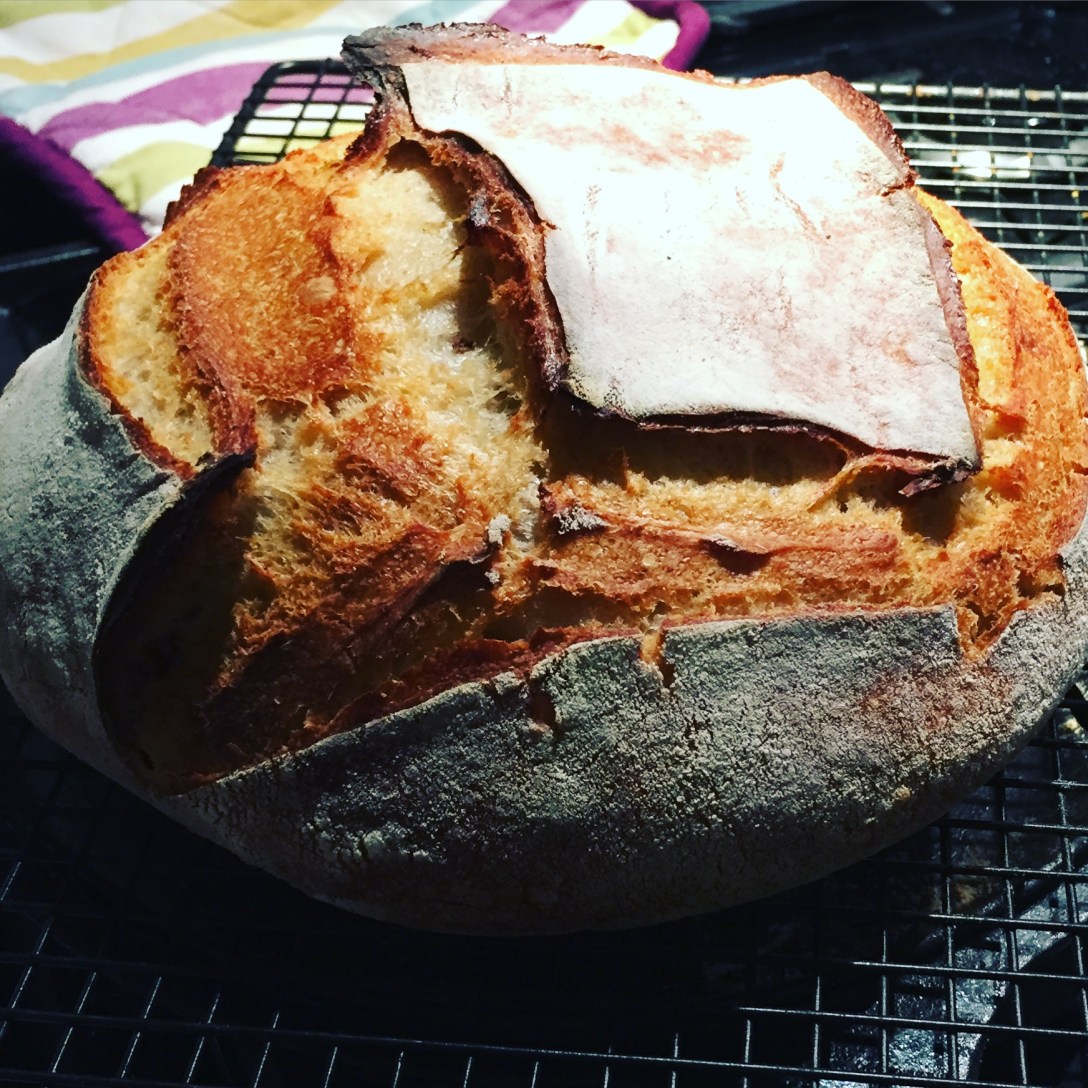
Bread making and word making

It’s summer, students have largely stopped spamming our inboxes, so it’s time to do some writing… And as I am cleaning up my email inbox in one of those work avoidance moments, I came across this lovely blog about writing and bread-making. It’s really about the PhD, but realistically if you live in a country that has the REF, this never ends!

Katherine Firth's avatarResearch Degree Insiders

Bread making is fascinating–on the one hand, humans have been making bread for about 15,000 years when all they had was some coals and some ground up grains (Egyptians and Indigenous Australians were both making loaves that long ago)–and since then, for millennia, people made perfectly edible loaves with rudimentary tools all over the world. Bread making, anyone can do it.
On the other hand, bread making is extraordinarily technical. Modern bread production is highly technologised, with specialised ingredients, equipment and training. Even making a modern loaf at home for serious bakers involves a whole raft of equipment and techniques not used for any other kind of cooking.
The third thing, though, is regardless of whether you make ‘anyone can do it’ bread or a really impressive loaf, only a few people actually bother to make bread at all.
Yes…

View original post 803 more words

EGOS SWG8 Final Program

Sub-theme 08: (SWG) History and Organization Studies: The Ways Forward

Convenors:

Daniel Wadhwani, University of the Pacific, USA, and Copenhagen Business School, Denmark; dwadhwani@pacific.edu

Matthias Kipping, Schulich School of Business, York University, Canada; mkipping@schulich.yorku.ca

Stephanie Decker, Aston Business School, UK; s.decker@aston.ac.uk

Session I: Thursday, July 07, 11:00 to 12:30, T5

Organizational History: The Past and the Future
Chair: Matthias Kipping

Peter Miskell
Management historians and public perceptions of the past: A neglected area?
Presenter/Discussant: Talia Pfefferman

Michael Rowlinson, John Hassard and Stephanie Decker
Organizational memory, history, and forgetting
Presenter/Discussant: Mairi MacLean

 Session II: Thursday, July 07, 14:00 to 15:30
– Parallel Stream –

 Parallel Stream A: Contextualizing Sensemaking & Identity – Room: T5
Chair: Stephanie Decker

Christian Stutz
Elaborating the strategic cognition view of issue salience: A historical case study
Presenter/Discussant: Rasmus Nykvist

Lars Geschwind, Rómulo Pinheiro and Bjørn Stensaker
To be or not to be: Institutional complexity and identity formation in the organizational field of higher education
Presenter/Discussant: Ron Kerr

 Parallel Stream B: Entrepreneurial Dynamics – Room: T6
Chair: Dan Wadhwani

 Andrew Smith and Eugene Choi
A Constitutive Historicism Approach Towards Understanding Sensemaking and Sensegiving in Japanese FabLabs
Presenter/Discussant: Tristan May

Giovanni Favero, Vladi Finotto and Anna Moretti
Resisting entrepreneurs: A conceptual framework of entrepreneurial imprinting
Presenter/Discussant: Charles Harvey

Mirko Ernkvist and Rasmus Nykvist
History in the regulatory legitimation of novel organizational forms by new organization
Presenter/Discussant: Fanny Simon

 Session III: Thursday, July 07, 16:00 to 17:30, T5
Corporate Uses of History

Chair: Stephanie Decker

 Mairi Maclean, Charles Harvey, John Sillince and Benjamin Golant
Intertextuality in organizational transition
Presenter/Discussant: Joeri Mol

Jan Frederik de Groot and Nachoem Wijnberg
Corporate art collections and organizational history
Presenter/Discussant: Elena Giovannoni

Ihar Sahakiants, Marion Festing and Thomas Steger
Organizational continuity and founder narrative: The role of primary stakeholders in sustaining a socially responsible corporate culture
Presenter/Discussant: Diego Coraiola

 Session IV: Friday, July 08, 09:00 to 10:30
– Parallel Stream –

 Parallel Stream A: Historical Construction of Cultural Goods – Room: T5
Chair: Stephanie Decker

Shiona Chillas, Melinda A. Grewar and Barbara Townley
Capitalising on history: The case of Scottish textiles
Presenter/Discussant: Jan Frederik de Groot

Tristan May
If 6 was 9: Rhetorical history and the multimodal reissuing of a glorious past
Presenter/Discussant: Michelle Mielly

Michelle Mielly, Gazi Islam and Maria Laura Toraldo
Alliance française in India & rhetorical uses of history
Presenter/Discussant: Mirko Ernkvist

 Parallel Stream B: New Methods, New Frontiers – Room: T6
Chair: Matthias Kipping

Zoi Pittaki
Walking a tightrope: business, the tax system and tax conscience in Greece, 1955-1989
Presenter/Discussant: Christian Stutz

Diego M. Coraiola, William M. Foster and Roy Suddaby
What is a historical case study?
Presenter/Discussant: Giovanni Favero

Wim van Lent and Matthijs den Besten
The Multiple Faces of the Span of Control: a Multilevel Analysis of the Dutch East India Company
Presenter/Discussant: Stephan Leixnering

Session V: Friday, July 08, 14:00 to 15:30, T5
The Sociohistorical Construction of Value
Chair: Dan Wadhwani

Michal Frenkel and Talia Pfefferman
On gendered justifications: Resource acquisition and worlds of worth in establishing small enterprises in Palestine, 1930–1947
Presenter/Discussant: Liv Egholm

Elena Giovannoni and Christopher Napier
The making of material objects through accounting re-presentations: The Founder’s Building at Royal Holloway, 1887-1897
Presenter/Discussant: Karim Ben Slimane

Joeri Mol, Graham Sewell, Miya Tokumitsu and Gerhard Wiesenfeldt
The institutionalization of signs of value: Icons, indexes and symbols in art markets
Presenter/Discussant: Pamela A. Popielarz

Session VI: Saturday, July 09, 09:00 to 10:30
– Parallel Stream –

Parallel Stream A: Industry Dynamics – Room: T5
Chair: Dan Wadhwani

Karim Ben Slimane, Damien Chaney, Eero Vaara and Tao Wang
Between memories and market. Relegitimation of absinthe in France since 1980s
Presenter/Discussant: Shilo Hills

Fanny Simon and Albéric Tellier
Imitation game: How coopetition can lead to standardization
Presenter/Discussant: Wim Van Lent

Shilo Hills, Maxim Ganzin, Roy Suddaby and William M. Foster
Strategic deployment of history and myth in identity construction: A story of the global wine industry
Presenter/Discussant: Shiona Chillas

Parallel Stream B: Constructing & Crossing Sectoral Divides – Room: T6
Chair: Stephanie Decker

Stephan Leixnering and Renate E. Meyer
Re-discovering an organizational form: Public interest-orientation as corner stone of the modern corporation
Presenter/Discussant: Zoi Pittaki

Pamela A. Popielarz
Moral dividends: Transpositions between business and Freemasonry in nineteenth century America
Presenter/Discussant: Lars Geschwind

Liv Egholm
The messiness of common good. Translation of concepts and practices between non-civil and civil spheres: the Egmont Foundation 1920–2014
Presenter/Discussant: Ihar Sahakiants

Session VII: Saturday, July 09, 11:00 to 12:30, T5
New Directions
Chair: Stephanie Decker

Ron Kerr and Sarah Robinson
Women leaders in the political field in Scotland: Extending the ‘historical turn’ to leadership studies
Presenter/Discussant: Andrew Smith

Rasmus Nykvist, Robin Gustafsson, Mirko Ernkvist, Christian Sandström, Erik Lakomaa and Zeerim Cheung
Towards an integrative digital history approach in organization studies
Presenter/Discussant: Peter Miskell

EGOS SWG8 program

Please see below for the program for our standing working group on organizational history at EGOS in Naples in July! If you are already at EGOS, we welcome guests.

Sub-theme 08: (SWG) History and Organization Studies: The Ways Forward

Convenors:

  1. Daniel Wadhwani, University of the Pacific, USA, and Copenhagen Business School, Denmark, dwadhwani@pacific.edu
  2. Matthias Kipping, Schulich School of Business, York University, Canada, mkipping@schulich.yorku.ca
  3. Stephanie Decker, Aston Business School, UK, s.decker@aston.ac.uk


Session I: Thursday, July 07, 11:00 to 12:30, T5

Organizational History: The Past and the Future
Chair: Matthias Kipping

Peter Miskell
Management historians and public perceptions of the past: A neglected area?
Presenter/Discussant: Andrew Smith

Michael Rowlinson, John Hassard and Stephanie Decker
Organizational memory, history, and forgetting
Presenter/Discussant: Mairi MacLean

 Session II: Thursday, July 07, 14:00 to 15:30

– Parallel Stream –

 Parallel Stream A: Contextualizing Sensemaking & Identity – Room: T5
Chair: Stephanie Decker

Christian Stutz
Elaborating the strategic cognition view of issue salience: A historical case study
Presenter/Discussant: Rasmus Nykvist

Anna Linda Musacchio Adorisio and Asgeir Torfason
Historicizing narratives: Rhetoric and storytelling of the Icelandic financial boom
Presenter/Discussant: Michelle Mielly

Lars Geschwind, Rómulo Pinheiro and Bjørn Stensaker
To be or not to be: Institutional complexity and identity formation in the organizational field of higher education
Presenter/Discussant: Ron Kerr

 Parallel Stream B: Entrepreneurial Dynamics – Room: T6
Chair: Dan Wadhwani

Andrew Smith and Eugene Choi
A Constitutive Historicism Approach Towards Understanding Sensemaking and Sensegiving in Japanese FabLabs
Presenter/Discussant: Tristan May

Giovanni Favero, Vladi Finotto and Anna Moretti
Resisting entrepreneurs: A conceptual framework of entrepreneurial imprinting
Presenter/Discussant: Charles Harvey

Mirko Ernkvist and Rasmus Nykvist
History in the regulatory legitimation of novel organizational forms by new organization
Presenter/Discussant: Fanny Simon

 Session III: Thursday, July 07, 16:00 to 17:30, T5

Corporate Uses of History
Chair: Stephanie Decker

 Mairi Maclean, Charles Harvey, John Sillince and Benjamin Golant
Intertextuality in organizational transition
Presenter/Discussant: Joeri Mol

Jan Frederik de Groot and Nachoem Wijnberg
Corporate art collections and organizational history
Presenter/Discussant: Elena Giovanni

Ihar Sahakiants, Marion Festing and Thomas Steger
Organizational continuity and founder narrative: The role of primary stakeholders in sustaining a socially responsible corporate culture
Presenter/Discussant: Diego Coraiola

 Session IV: Friday, July 08, 09:00 to 10:30

– Parallel Stream –

 Parallel Stream A: Historical Construction of Cultural Goods – Room: T5
Chair: Stephanie Decker

Shiona Chillas, Melinda A. Grewar and Barbara Townley
Capitalising on history: The case of Scottish textiles
Presenter/Discussant: Jan Frederik de Groot

Tristan May
If 6 was 9: Rhetorical history and the multimodal reissuing of a glorious past
Presenter/Discussant: Anna Linda Musacchio Adorisio

Michelle Mielly, Gazi Islam and Maria Laura Toraldo
Alliance française in India & rhetorical uses of history
Presenter/Discussant: Mirko Ernkvist

 Parallel Stream B: New Methods, New Frontiers – Room: T6
Chair: Matthias Kipping

Zoi Pittaki
Walking a tightrope: business, the tax system and tax conscience in Greece, 1955-1989
Presenter/Discussant: Christian Stutz

Diego M. Coraiola, William M. Foster and Roy Suddaby
What is a historical case study?
Presenter/Discussant: Giovanni Favero

Wim van Lent and Matthijs den Besten
The Multiple Faces of the Span of Control: a Multilevel Analysis of the Dutch East India Company
Presenter/Discussant: Stephan Leixnering

 Session V: Friday, July 08, 14:00 to 15:30, T5

The Sociohistorical Construction of Value
Chair: Dan Wadhwani

Michal Frenkel and Talia Pfefferman
On gendered justifications: Resource acquisition and worlds of worth in establishing small enterprises in Palestine, 1930–1947
Presenter/Discussant: Liv Egholm

Elena Giovannoni and Christopher Napier
The making of material objects through accounting re-presentations: The Founder’s Building at Royal Holloway, 1887-1897
Presenter/Discussant: Karim Ben Slimane

 Joeri Mol, Graham Sewell, Miya Tokumitsu and Gerhard Wiesenfeldt
The institutionalization of signs of value: Icons, indexes and symbols in art markets
Presenter/Discussant: Pamela A. Popielarz

 Session VI: Saturday, July 09, 09:00 to 10:30

– Parallel Stream –

 Parallel Stream A: Industry Dynamics – Room: T5
Chair: Dan Wadhwani

Karim Ben Slimane, Damien Chaney, Eero Vaara and Tao Wang
Between memories and market. Relegitimation of absinthe in France since 1980s
Presenter/Discussant: Lars Geschwind

Fanny Simon and Albéric Tellier
Imitation game: How coopetition can lead to standardization
Presenter/Discussant: Wim Van Lent

Shilo Hills, Maxim Ganzin, Roy Suddaby and William M. Foster
Strategic deployment of history and myth in identity construction: A story of the global wine industry
Presenter/Discussant: Shiona Chillas

 Parallel Stream B: Constructing & Crossing Sectoral Divides – Room: T6
Chair: Stephanie Decker

Stephan Leixnering and Renate E. Meyer
Re-discovering an organizational form: Public interest-orientation as corner stone of the modern corporation
Presenter/Discussant: Zoi Pittaki

Pamela A. Popielarz
Moral dividends: Transpositions between business and Freemasonry in nineteenth century America
Presenter/Discussant: Lars Geschwind

Liv Egholm
The messiness of common good. Translation of concepts and practices between non-civil and civil spheres: the Egmont Foundation 1920–2014
Presenter/Discussant: Ihar Sahakiants

 Session VII: Saturday, July 09, 11:00 to 12:30, T5

 New Directions
Chair: Stephanie Decker

Ron Kerr and Sarah Robinson
Women leaders in the political field in Scotland: Extending the ‘historical turn’ to leadership studies
Presenter/Discussant: Talia Pfefferman

Rasmus Nykvist, Robin Gustafsson, Mirko Ernkvist, Christian Sandström, Erik Lakomaa and Zeerim Cheung
Towards an integrative digital history approach in organization studies
Presenter/Discussant: Peter Miskell


MOH SI: Imperialism & Coloniality in MOH

Management & Organizational History

Special issue call for papers:

Imperialism and Coloniality in Management and Organization History

Deadline: 16 December 2016

Management & Organizational History

The ongoing dialogue about the role that history can play in the formation of organization theory, and the role that organization theory can and does play in management and organization history (Maclean, Harvey, and Clegg 2015; Rowlinson, Hassard, and Decker 2014; Taylor, Bell, and Cooke 2009; Clark and Rowlinson 2004) should enjoinder greater engagement with areas where historians have long engaged in theoretical work. Classical theories of imperialism (Hobson 1902; Lenin 1999; Schumpeter 1951), historiographical theories of imperialism (Cain and Hopkins 2002; Gallagher and Robinson 1953; Jones 1980; West 1973), and post-colonial theory that explores the operation of capitalism (for example, Chibber 2014; Quijano 2007; Moraña, Dussel, and Jáuregui 2008) are all theory-sets that draw heavily on historical analysis. The already rich relationship between history and theory in these connected fields provides an opportunity to explore the contribution that management and organization history can make to both the theories and history of imperialism and coloniality, and how a reflection on these topics can provoke a richer and theory-informed understanding of how management and organizations replicate and form circuits of power–globally and locally.

In a contribution to the growing literature on coloniality, Aníbal Quijano writes that

In the beginning colonialism was a product of a systematic repression, not only of the specific beliefs, ideas, images, symbols or knowledge that were not useful to global colonial domination, while at the same time the colonizers were expropriating from the colonized their knowledge, specially in mining, agriculture, engineering, as well as their products and work. The repression fell, above all, over the modes of knowing, of producing knowledge, of producing perspectives, images and systems of images, symbols, modes of signification, over the resources, patterns, and instruments of formalized and objectivised expression, intellectual or visual. (Quijano, 2007, p.169).

The historical and contemporary claims made by Quijano that relate to management and organization (for instance, the simultaneous and ongoing imposition and expropriation of socio-economic knowledge) and its express linkage to business activities, resonates with the business history literature on the role that corporations have played in the process of imperialism in “informal” spheres, in particular in Latin America (for example, the classic work of Christopher Platt. See Platt 1977 as well as Jones 1980, and Miller 1999). While there have been recent contributions to that have reflected on the use of knowledge and organizational learning in the creation of colonial business activity (Mollan 2009) and the continuity of management practices from the colonial period to the present (Cooke 2003) there remains a gulf in knowledge of how business–and managerial practices of firms and other international organizations–created and sustained the social and economic relationships described by the writers on coloniality and imperialism. The methods of coercion, systemic integration, management control, and knowledge, remain largely opaque at the organizational level. Nevertheless, the continuity of these practices is present in what Bobby Banerjee has described as ‘necrocapitalism’, a contemporary form of colonialism; the power of corporations ‘to create lifeworlds and deathworlds in the contemporary political economy’ (Banerjee 2008, 1542). If this is so, then a fuller understanding of imperialism and coloniality in management and organization history will have much to reveal about international economic relations, social and economic development, enduring inequalities, and managerial and organizational behaviour in the liminal space between the ‘developed’ and ’emerging’ economies however considered with reference to period and place.

Topics might include but are not limited to:

  • The absorption and co-option of knowledge from colonized peoples into the organization(s) and management of empire
  • How management and organization perform agency and create structure in imperial and post-colonial contexts
  • Management and organization historical studies that explore classical, historiographical and post-colonial theories of imperialism and coloniality
  • New management and organization theories of imperialism and coloniality
  • Organizations as sites of contestation and liminality in imperial and colonial encounters
  • Management and organization as acts of colonial violence
  • The relationship between business, management, organization and (under)development in imperial and post-colonial periods
  • Management and organization as processes, and organizations as institutions, in the transmission of imperial power
  • Managers as colonial elites; colonial elites as managers
  • The development of management thought and its relationship to (neo)imperial ideas
  • Slavery and forced labour in the management and organization history of empire
  • Representations of empire in corporate history
  • Corporate archives as archives of imperialism
  • The colonial heritage of multinationals

References

Banerjee, Subhabrata Bobby. 2008. “Necrocapitalism.” Organization Studies 29 (12): 1541–63.
Cain, Peter J., and Anthony G. Hopkins. 2002. British Imperialism: 1688-2000. London: Pearson Education.
Chibber, Vivek. 2014. Postcolonial Theory and the Specter of Capital. Verso Books.
Clark, Peter, and Michael Rowlinson. 2004. “The Treatment of History in Organisation Studies: Towards an ‘Historic Turn’?” Business History 46 (3): 331–52.
Cooke, Bill. 2003. “The Denial of Slavery in Management Studies.” Journal of Management Studies 40 (8). Blackwell Publishing Ltd.: 1895–1918. doi:10.1046/j.1467-6486.2003.00405.x.
Gallagher, John, and Ronald Robinson. 1953. “The Imperialism of Free Trade.” The Economic History Review 6 (1). Wiley Online Library: 1–15.
Hobson, John Atkinson. 1902. Imperialism: A Study. Vol. 3. London.
Jones, Charles. 1980. “‘Business Imperialism’and Argentina, 1875-1900: A Theoretical Note.” Journal of Latin American Studies 12 (2). JSTOR: 437–44.
Lenin, Vladimir Ilʹich. 1999. Imperialism: The Highest Stage of Capitalism. Resistance Books.
Maclean, Mairi, Charles Harvey, and Stewart R Clegg. 2015. “Conceptualizing Historical Organization Studies.” Academy of Management Review.
Miller, Rory. 1999. “Informal Empire in Latin America.” Winks, Robin W., The Oxford History of the British Empire 5.
Mollan, Simon. 2009. “Business Failure, Capital Investment and Information: Mining Companies in the Anglo-Egyptian Sudan, 1900–13.” The Journal of Imperial and Commonwealth History 37 (2): 229–48.
Moraña, Mabel, Enrique D Dussel, and Carlos A Jáuregui. 2008. Coloniality at Large: Latin America and the Postcolonial Debate. Duke University Press.
Platt, Desmond Christopher Martin. 1977. Business Imperialism, 1840-1930: An Inquiry Based on British Experience in Latin America. Oxford: Clarendon Press.
Quijano, Aníbal. 2007. “Coloniality and Modernity/rationality.” Cultural Studies 21 (2-3). Taylor & Francis: 168–78.
Rowlinson, Michael, John Hassard, and Stephanie Decker. 2014. “Research Strategies for Organizational History: A Dialogue between Historical Theory and Organization Theory.” Academy of Management Review 39 (3): 250–74.
Schumpeter, Joseph A. 1951. The Sociology of Imperialism. Meridian Books.
Taylor, Scott, Emma Bell, and Bill Cooke. 2009. “Business History and the Historiographical Operation.”Management & Organizational History 4 (2): 151–66..
West, Katharine. 1973. “Theorising about ‘imperialism’: A Methodological Note.” The Journal of Imperial and Commonwealth History 1 (2): 147–54.

Submission Instructions

Informal enquiries to the editors of the Special Issue are welcome:

The York Management School
University of York
Freboys Lane
Heslington
York
United Kingdom
YO10 5GD

Paper development workshops

To support the development of papers for this special issue, there will be two opportunities for intending authors to present and develop their work.

The Management History Research Group Annual workshop will be held in Sheffield on Tuesday 12 and Wednesday 13 July 2016. Panels relating to the Special Issue will be held at the workshop. Further details can be found at the web-link below:

http://mgt-hist.org/index.php/mhrg-2016-sheffield/

There will be a further one-day PDW held in the Autumn of 2016, details of which will be advertised in due course.

Deadline for article submissions: Friday 16 December 2016

Editorial information

ToC: Business History 58,6 (September) now out

Articles

Turnaround and failure: Resource weaknesses and the rise and fall of Jarvis
Andrew Wild & Andy Lockett
Pages: 829-857 | DOI: 10.1080/00076791.2015.1024229

Economic and Social Power in Spain: corporate networks of banks, utilities and other large companies (1917–2009)
Juan A. Rubio-Mondéjar & Jósean Garrués-Irurzun
Pages: 858-879 | DOI: 10.1080/00076791.2015.1115483

The transatlantic business community faced with US direct investment in Western Europe, 1958–1968
Janick Marina Schaufelbuehl
Pages: 880-902 | DOI: 10.1080/00076791.2015.1128895

Strategic manoeuvres and impression management: communication approaches in the case of a crisis event
Brendan O’Connell, Paul De Lange, Greg Stoner & Alan Sangster
Pages: 903-924 | DOI: 10.1080/00076791.2015.1128896

A rum deal: The purser’s measure and accounting control of materials in the Royal Navy, 1665–1832
Karen McBride, Tony Hines & Russell Craig
Pages: 925-946 | DOI: 10.1080/00076791.2016.1153068

‘Not to bet the farm’: SANLAM and internationalisation, 1995–2010
Grietjie Verhoef
Pages: 947-973 | DOI: 10.1080/00076791.2016.1153628
Book Review

L’Énergie de la France. De Zoé aux EPR, l’histoire du programme nucléaire
Hubert Bonin
Pages: 974-977 | DOI: 10.1080/00076791.2015.1068517

Capital of capital. Money, banking and power in New York City, 1784–2012
Hubert Bonin
Pages: 977-979 | DOI: 10.1080/00076791.2015.1100526

British economic growth, 1270–1870
Roger Middleton
Pages: 979-981 | DOI: 10.1080/00076791.2015.1123801

The Cadbury Committee: a history
Anna Tilba
Pages: 981-982 | DOI: 10.1080/00076791.2015.1123806

Crisis, credibility and corporate history
Robin Pearson
Pages: 982-983 | DOI: 10.1080/00076791.2015.1123805

Management History Research Group Annual Workshop

Management History Research Group Annual Workshop: Kelham Island Industrial Museum, Sheffield 12-13 July 2016

The MHRG annual workshop is a friendly, economical and academically open venue for the presentation of research in the field of management history, broadly defined. Papers that relate to the workshop theme or any other topic in management history are welcome. This year’s venue is Kelham Island Industrial Museum, Sheffield, home to a Bessemer converter, with many welcoming amenities nearby.


For any further information, please follow this link: http://mgt-hist.org/index.php/mhrg-2016-sheffield/

Transparency and information management in financial institutions From the inside out — The Past Speaks

Reblogged from The Past Speaks:

Conference: 14 Sep 2016, Madrid, Spain European Business History Association in cooperation with Banco de España. Transparency is becoming an increasingly important theme, and mode of operation, in today’s financial institutions and global financial markets. This year’s eabh summer school will provide training on the latest developments in financial transparency and how financial archivists can serve their […]

via Transparency and information management in financial institutions From the inside out — The Past Speaks

The Uses of History in the Brexit Debate

A number of blogs have highlighted the way history has been leveraged by campaigners in the EU referendum, and Andrew Smith has written an interesting blog about the uses of the past:

andrewdsmith's avatarThe Past Speaks

My primary research interests nowadays are on how economic actors such as entrepreneurs and managers use historical ideas to make sense of the present and to plan for the future. I am, therefore, fascinated by the ways in which historical analogy is being used in the debate leading up to our referendum on EU membership. The quality of the analogic-historical reasoning on display varies enormously, of course, (yesterday David Cameron was compared to Neville Chamberlain)  .but from my point of view the interesting thing is that businesspeople are having recourse to the heuristic of historical analogy to make sense of the EU debate. I suppose it isn’t surprising that they are using historical analogy, given the degree of Knightian uncertainty that the prospect of leaving the EU has created for UK firms. For instance, if you watch this video from the Financial Times, you will note that the…

View original post 147 more words