
Category: General

Moshik Temkin’s Assertions about the Limits of Analogical-Historical Reasoning
Reblogged from The Past Speaks:

Moshik Temkin is an associate professor of history and public policy at the Harvard Kennedy School. He recently published a piece in the New York Times on the limits of analogical historical reasoning. He observes that the chaotic Trump presidency has increased the demand for the services of historians.
Donald Trump might be disastrous for most Americans and a danger to the world, but he has been a boon to historians. The more grotesque his presidency appears, the more historians are called on to make sense of it, often in 30-second blasts on cable news or in quick-take quotes in a news article.
Temkin notes that one of the most popular analogies used to understand Trump is the Nixon presidency. Temkin cautions against the use of this historical analogy and all of the other historical analogies currently being used to make sense of Trump. He writes that
We teach our…
View original post 983 more words
Management History Research Group Annual Workshop, 2017
Reblogged from The Past Speaks:
July 10-11th 2017, People’s History Museum, Manchester, Left Bank, Spinningfields, M3 3ER
| Paper Session 2A: Labour, Management and Democracy Chair: Peter Hampson, Location: Coal Store |
| Swapnesh Masrani and Linda Perriton |
| Getting together, living together, thinking together: Tata Sons’ Staff College in the 1940s |
| Nicola Bishop |
| The Middle-Class Clerk as British Cultural ‘Everyman’ |
| Bill Cooke |
| McCarthyism and Loyalty Oaths 2.0: Signs and Strategies from History |
| Paper Session 2B: Strategies, Numbers, Codes and Machines Chair: Chris Corker, Location: Meeting Room |
| Joseph Lampel, Ali Bayat and Mercedes Bleda |
| The National Response to Global Educational Metrics: When Do Governments Fall into Line? |
| Philip Garnett and Simon Mollan |
| The Business of Cryptography |
| Kevin Tennent |
| Le Corbusier, the town planners, and the corporate strategists. Or, the Corporation as a Machine for Working In |
Paper session 3: Communities, Crises and Survival. Chair: Des Williamson. Location: Coal Store
John Singleton
Approaches to Safety Management in Early…
View original post 174 more words
Workshop report: Pop Nostalgia
The German Historical Institute published a workshop report on an interesting event on pop nostalgia & uses of the past that took place last year here: https://www.ghil.ac.uk/pop_nostalgia.html
Pop Nostalgia: The Uses of the Past in Popular Culture

Pop nostalgia, we are told, is everywhere. Our current golden age of television—from Mad Men to Vinyl, Downton Abbey to Call the Midwife—lovingly recreates earlier periods of the twentieth century, while club nights devoted to the 1980s or 1990s allow us to return to our youth. What is more, popular culture is, in the words of music journalist Simon Reynolds, addicted to its own past. It not only reminisces, it revives, reissues, remixes earlier forms and styles instead of coming up with genuinely new. Finally, our most modern technologies are always also time machines: producing sepia-coloured images of the present for an anticipated nostalgic recollection in the future.
These very different cultural phenomena, which are often subsumed under the term nostalgia, raise a number of still under-explored questions. How new is this development, given that period films are as old as the cinema and that popular culture and music has drawn on earlier periods as long as it exists? Can the recycling of old styles and forms not also be highly creative and result in innovations? Are period settings and costumes, retro and vintage styles as such indicative and synonymous with nostalgia? Is it really nostalgia that drives our interest in and our engagement with the past? And if not what other motivations are at play? What role, for example, have media technologies such as film and the internet played in preserving the culture of the past in the present?
These are some of the questions the workshop Pop Nostalgia addresses. It explores the uses of the past in popular culture across all media and genre, from literature, cinema, television, and video games to theme park, club nights and sports events. It is interested not only in representations of the past but also in their production and circulation as well as in audiences and reception. The workshop is particularly interested in the historical dimension of pop nostalgia.
New article on History Reframing Institutional Logics
And we are happy to announce another great contribution to the ongoing debate on organizational history:
PRACTICE, SUBSTANCE AND HISTORY: REFRAMING INSTITUTIONAL LOGICS
- Alistair Mutch⇑
Nottingham Business School, Nottingham trent University, Nottingham, NG1 4BU, United Kingdom of Great Britain and Northern Ireland
- Correspondence: Alistair Mutch, Email: alistair.mutch@ntu.ac.uk
Abstract
The characterization by Roger Friedland of institutional logics as a combination of substance and practices opens the door to a more complex reading of their influence on organizational life. His focus suggests attention to feelings and belief as much as cognition and choice. This article uses history to develop these ideas by paying attention to the perennial features of our embodied relations with the world and other persons. Historical work draws our attention to neglected domains of social life, such as play, which can have profound impacts on organizations. The study of history suggests that such institutions have a long run conditioning influence that calls into question accounts that stress individual agential choice and action in bringing about change. Analytical narratives of the emergence of practices can provide the means to combine the conceptual apparatus of organization theory with the attention to temporality of history.
- Received September 10, 2015.
- Revision received May 9, 2017.
- Accepted May 12, 2017.
Reflections on ABH 2017
Reblogged from The Past Speaks:
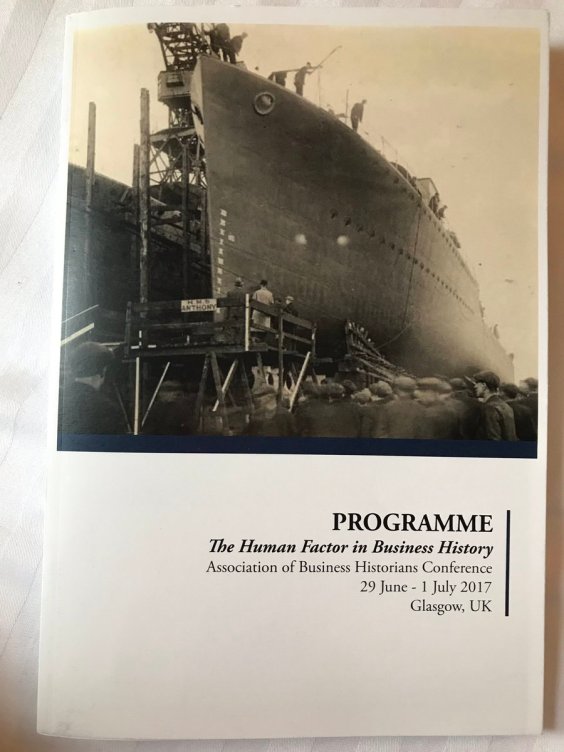
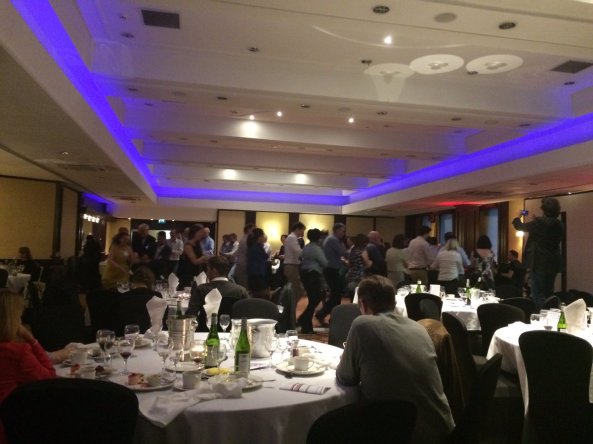
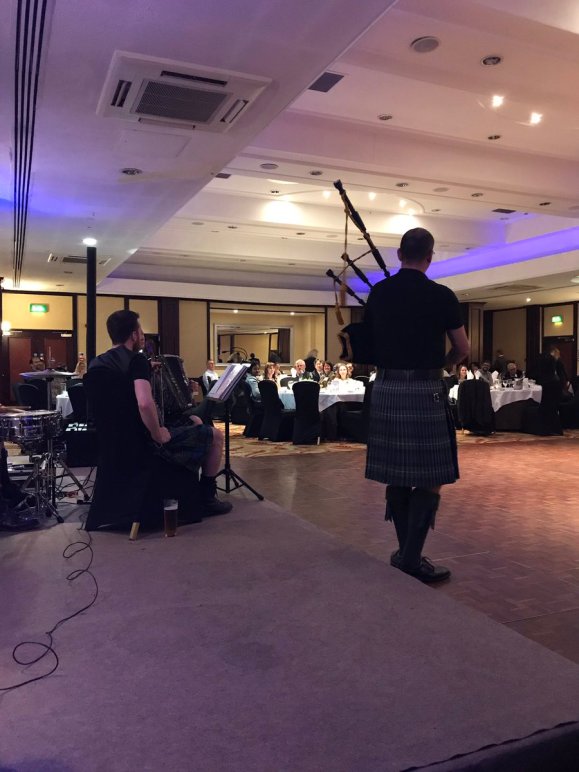
The Association of Business Historians conference 2017 was a brilliant success thanks to the hard work of the organizing committee in Glasgow. In addition to the excellent academic sessions, the conference included many additional social events, including a Ceilidh. I’m sharing some images of both below.
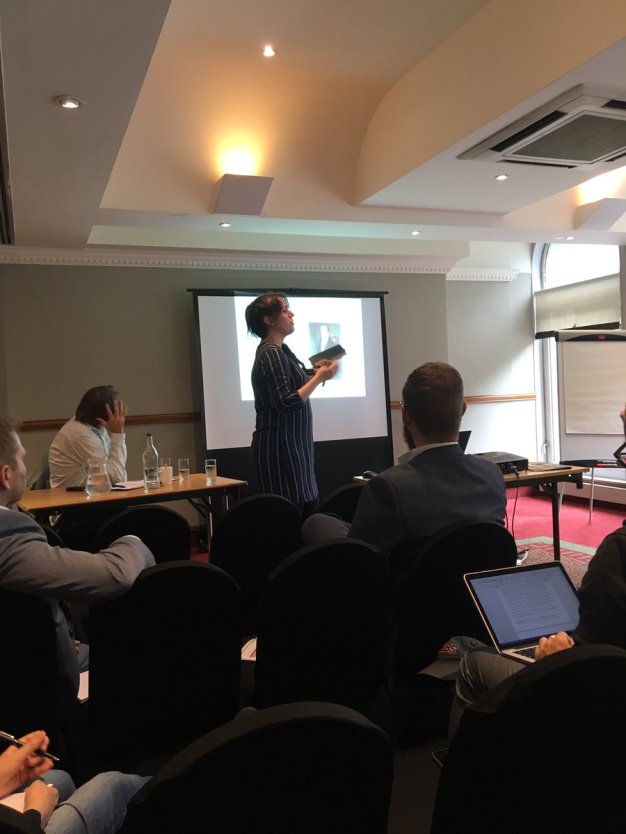 @zoipittaki on the word ‘entrepreneur’ in four languages and the frequency of the use of the ‘entrepreneur’ #abh2017 #Glasgow Photo by Maelle Duchemin-Pell
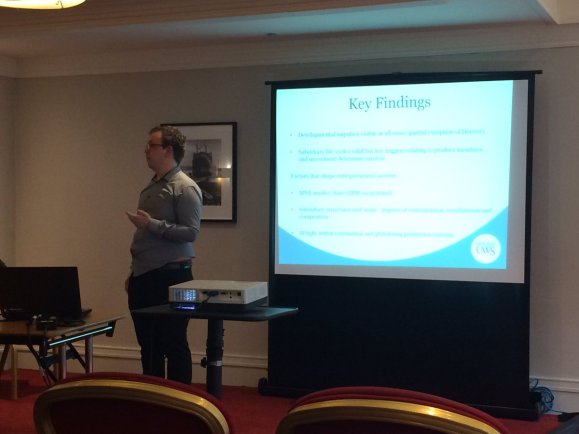 @ewangibbs on US manufacturing multinationals in #Scotland #abh2017 #Glasgow
New article in Organizational History
I’m very pleased that one of my joint-authored article has been published. Thanks again to the great group at EGOS who discussed a much earlier version of our paper in 2014!
Clio in the business school: Historical approaches in strategy, international business and entrepreneurship

Abstract
On the back of recent and significant new debates on the use of history within business and management studies, we consider the perception of historians as being anti-theory and of having methodological shortcomings; and business and management scholars displaying insufficient attention to historical context and privileging of certain social science methods over others. These are explored through an examination of three subjects: strategy, international business and entrepreneurship. We propose a framework for advancing the use of history within business and management studies more generally through greater understanding of historical perspectives and methodologies.
New article on MOH
AOM PDW: Frontiers of Digital History Methods
Academy of Management Meeting, Atlanta
PDW Workshop
Frontiers of Digital History Methods and Tools for Management, Organization, and History Scholars
Friday, Aug 4 2017 2:00PM – 4:00PM
Session Type: PDW Workshop
Submission: 16488
Sponsor: MH
Scheduled: Friday, Aug 4 2017 2:00PM – 4:00PM at Hyatt Regency Atlanta in Hanover Hall E
Organizer: Robin Gustafsson, Aalto U.
Organizer: Mirko Ernkvist, Ratio Institute
Presenter: Charles Edward Harvey, Newcastle U.
Presenter: Mirko Ernkvist, Ratio Institute
Presenter: Mairi Maclean, U. of Bath
Presenter: Johann Peter Murmann, U. of New South Wales
Presenter: Michael Rowlinson, U. of Exeter
Presenter: David A. Kirsch, U. of Maryland
This PDW This PDW sets out to provide a broad overview and insights to management, organization, and history scholars at large on the current research forefront in how digital databases, methods and tools could contribute to the integration of management, organization, and history research. Overall the PDW centers on the idea for outlining opportunities and current frontier work with digital methods and tools for systematic digital reconstruction of historical sources, rigor and transparency of analysis and inference from evidence. These methodological advances enable new forms of scholarship and research groups collaborations. This PDW will: (1) introduce the participants to the historical developments of digital databases, tools and methods; (2) provide perspectives by forerunner management, organization, and business history researchers on methodological advantages, challenges and opportunities with digital history methods and tools for the integration of management, organization, and historical research; (3) present leading recent research work with digital methods and tools using large-scale digitized historical sources and evidence; (4) provide ample of time for Q&As and open discussions.
New Book: The Emergence of Routines (Raff and Scranton)
Business historians Dan Raff and Phil Scranton have published an interesting new edited collection that explores the intersection of business history, business strategy, and entrepreneurship. Published by OUP, The Emergence of Routines includes a series of historical case studies examining the origins of organizational order in firms. The book includes a conceptual introduction and an intriguingly titled concluding chapter on “learning from history” that should be of interest to readers of this blog.
From the OUP Site’s Description:
This book is a collection of essays about the emergence of routines and, more generally, about getting things organized in firms and in industries in early stages and in transition.
These are subjects of the greatest interest to students of entrepreneurship and organizations, as well as to business historians, but the academic literature is thin. The chronological settings of the book’s eleven substantive chapters are historical, reaching as far back as the late 1800s right up to the 1990s, but the issues they raise are evergreen and the historical perspective is exploited to advantage.
The chapters are organized in three broad groups: examining the emergence of order and routines in initiatives, studying the same subject in ongoing operations, and a third focusing specifically on the phenomena of transition. The topics range from the Book-of-the-Month Club to industrial research at Alcoa, from the evolution of procurement and coordination to project-based industries such as bridge- and dam-building and the governance of defence contracting, and from the development of project performance appraisal at the World Bank to the way the global automobile industry collectively redesigned the internal combustion engine to deal with after the advent of environmental regulation. The chapters are vivid and thought-provoking in themselves and, for pedagogical purposes, offer excellent jumping-off points for discussion of relevant experiences and cognate academic literature.
 Organizational History Network