Sven Beckert places cotton at the center of his colossal history of modern capitalism, arguing that the growth of the industry was the “launching pad for the broader Industrial Revolution.” Beckert follows cotton through a staggering spatial and chronological scope. Spanning five thousand years of cotton’s history, with a particular focus on the seventeenth to twentieth centuries, Empire of Cotton is a tale of the spread of industrialization and the rise of modern global capitalism. Through emphasizing the international nature of the cotton industry, Beckert exemplifies how history of the commodity and global history are ideally suited to each other. Produced over the course of ten years and with a transnational breadth of archive material, Empire of Cotton is a bold, ambitious work that confronts challenges that many historians could only dream of attempting. The result is a popular history that is largely successful in attaining the desirable combination of being both rigorous and entertaining.
IBM Rebuilds Europe: The Curious Case of the Transnational Typewriter
By Petri Paju (Turku) and Thomas Haigh (Wisconsin, Milwaukee).
Abstract: In the decade after the Second World War IBM rebuilt its European operations as integrated, wholly owned subsidiaries of its World Trade Corporation, chartered in 1949. Long before the European common market eliminated trade barriers, IBM created its own internal networks of trade, allocating the production of different components and products between its new subsidiaries. Their exchange relationships were managed centrally to ensure that no European subsidiary was a consistent net importer. At the heart of this system were eight national electric typewriter plants, each assembling parts produced by other European countries. IBM promoted these transnational typewriters as symbols of a new and peaceful Europe and its leader, Thomas J. Watson, Sr., was an enthusiastic supporter of early European moves toward economic integration. We argue that IBM’s humble typewriter and…
My colleague Richard Toye at Exeter wrote this interesting blog about originality in historical research – the equivalent of the theoretical contribution in management and organization studies.
Richard Toye Director, Centre for Imperial & Global History
For anyone contemplating a research career in History, perhaps the most daunting thing is coming up with an original project. Whatever your period or area of interest is, there is likely a considerable body of scholarship on it already, and in some fields the volume will look simply enormous. How, then, can you work out what remains left to be done? Even more importantly, how can you craft a PhD proposal that promises to do more than simply “fill a gap”?
After all, if you aspire to become a professional historian you ultimately need to write a thesis that can plausibly be presented as a major academic intervention. You will have to sell what you do to hiring committees in that way. That sounds scary, especially if you have only recently completed your undergraduate degree and, perhaps, are faced with the…
The firm and the sea: chains, flows and connections
Call for Papers, EBHA 2018 Conference Università Politecnica delle Marche, Ancona – Italy September 6-8, 2018
The sea – whether considered as open ocean or as a mass of water bordered by land masses – is an enormous economic resource for mankind. Not only is it the principal way of transportation for goods and humans but it’s also a formidable source of food. Since we want to link the sea with the business unit (the firm, as well as other organizational units like clusters, networks and global value chains) the focus of the next EBHA conference will be on two units of analysis that are both extremely relevant for the sea as well as economic resources – ships and harbors.
In order to perform its function, the ship (a means for transporting goods and people) is run in a very hierarchical way, more than what occurs with a factory or a retail company (two good comparison points). Just as with a factory or retailer, ships embody economic goals to be achieved by workers, managers, and – this is the difference – CEOs whose decisions cannot be challenged given that the cargo and (more importantly) the life of its “inhabitants” can be at stake.
Rarely does the ship stand on its own as a business unit (unless we talk of an activity like fishing which is certainly important). It’s part of a group that refers to a shipowner acting in a very complicated world where the ups and downs of charters and continuous struggles with government regulations and policies render decisions delicate and complex.
The ship is the nexus of a tremendous amount of activity – just consider the shipyards, metallurgic factories, plants producing precision equipment, and those dedicated to heavy machinery. And think of other sectors like the extraction of raw materials and agricultural products that could have a real global circulation in relation to the capacity of the maritime vehicle.
Then there are associated service sectors such as insurance and banking activities focused on navigation (often with government support). Credit for navigation is a landmark of the modern economy with both successes as well as bankruptcies. Also worthy of further study is the role that passenger ships have played in the social and economic development of many nations. From the large ships of the late 19th and early 20th centuries that plied the Atlantic Ocean transporting passengers between the Americas and Europe to the postwar ocean liners that offered a glamorous way to travel to new destinations, ships helped make the tourism industry grow.
And we can’t close our eyes to some of the unlawful activities connected with the world of navigation including the illegal transportation of human beings, prohibited goods, and money laundering. Even today there are occasional episodes of piracy, something that we thought limited to history books and old novels.
The second actor we consider is strictly related to the first one – ports, an unavoidable reference point for ships that make them their destination for the goods and passengers on board. It’s in the port that a ship can stock materials needed when at sea and eventually undergo repairs before embarking on a new journey. We see the port as an
1
entrepreneur (formed by stakeholders with both common and divergent goals) which should be analyzed in an historical perspective. First are the many aspects of the governance of the port: who’s in charge? Is it a function of the State or the military? Is it a managerially run port authority that, even if designated by State powers, has relative autonomy in its actions? Are there private operators who handle the terminals? How does the type of governance impact a port’s efficiency? Second, we have to single out the crowd of operators in a port: maritime agents, stevedores, people who maneuver the cranes, pilots, dock workers. Several of these activities are strictly regulated, at times resulting in strong conflicts between various actors in the port.
The relationship between a port and the areas around it, the presence of appropriate infrastructures, and the many activities making up the field of logistics – all are tremendously important for the port as a kind of entrepreneur. Given their role of stimulating the trade of goods, raw materials and energy sources, the port becomes a key actor of the development of productive areas. Ports can strengthen or even launch the industrial take-off of the territories they supply. Moreover, ports are historically linked to global cities, nodes in a complex network of trade, but also of political international alliances, which emerged progressively in the phases of globalization (from Singapore to Hong Kong and from San Francisco to Yokohama, for example).
Even today seas and their ports remain a theater in which important geo-political and geo-economic stances take place; their relevance for business history can’t be underestimated. From the building or restructuring of infrastructures that are pillars of the first wave of globalization (the Suez and Panama Canals, for example) to new opportunities brought about by the latest waves of globalization, the sea continues to be an essential, physical component of the complex web of trade relations which allow the existence of global value chains that take advantage of its unique means of connection and communication.
Possible topics include (but are not limited to):
Connections, links and networks in waves of globalization and de-globalization
Characteristics and dynamics of the shipping and logistics industries
The long run transformation of shipbuilding and related industries
The fishing industry
The history of insurance and banking activities related to navigation
Technological developments and their impact on ships and ports
The variety and features of illegal activities connected to sea transport
Features and management of companies connected with the world of navigation
Private and public entrepreneurship in sectors related to sea transportation
Workers and industrial relations in maritime industries
The governance of ports and their transformation over time
Relations of cooperation/competition among maritime companies and ports
The history and development of global value chains and networks
Last, but not least, ports, ships, and even the sea are highly sensitive to technological change and the resulting emergence of competitive and alternative infrastructures (from railways and motorways to airlines and large airport hubs).
2
The role played by firms and entrepreneurs in shaping the development of maritime exchanges of goods, services, and information, or in integrating economies and cultures
Seas, ports and climate change
Dynamics and impact of governmental policies and regulations on navigation
The political economy of connections and links
The impact of ports on their surrounding territory and vice versa
The geography and features of global cities and their transformation
The role of the sea in shaping the emergence and consolidation of different kinds of
capitalism
Migrations flows across the sea
Passenger travel and the growth of tourism
International investments in the maritime industries
The relationships among port cities seen as nodes of a global network where
dimensions and scope change over time
The organizers expect to receive proposals related to some of the suggestions outlined above. But consideration will also be given to papers covering other aspects of the broader conference title.
In the event of a business history topic without ties to the sea or the firm, consideration will be given, provided that the proposal demonstrates originality and that this forum could be a useful place for further reflection.
We also invite other formats, such as panels and roundtables, poster sessions for Ph.D. students, workshops aiming to start collaborative projects, and “toolkit sessions”. Proposals should be directed to the paper committee as well.
Requirements for proposals
The submission system consists of a template that specifically asks for
(1) Author information: affiliation, short CV, authored publications related to the paper proposal
(2) An abstract of no more than 800 words
(3) Additional information important to the program committee: clear statement of the research question (not more than 150 words), brief information on the theoretical/conceptual framework used, major research areas to which the paper relates
(4) Joint papers need a responsible applicant who will be at the conference if the proposal is accepted.
Please have this information ready to enter into the submission system via copy and paste.
Requirements for panel proposals and roundtables
The criteria for single paper proposals also apply to session and roundtables proposals. There is, however, a specific template for session proposals.
3
Sessions can be ninety minutes long (usually three papers) or two hours in order to accommodate more papers. A successful panel/roundtable leaves significant time for the audience to raise questions, to comment and to generally discuss the panel’s theme.
A session proposal should not be made up of participants exclusively from one country. The program committee retains the right to integrate papers into sessions as they see fit.
Please note that paper, session/panel proposals must be submitted via the congress website (use this link http://ebha.org/public/C9 to upload proposals). See the Conference Website (http://ebha18.univpm.it) for further details.
The deadline is Monday, January 15, 2018.
If you have any questions please contact Veronica Binda or Roberto Giulianelli at:
On behalf of the Business History editorial team, I am happy to announce that for submissions from January 2018 onwards, Business History has changed the referencing style to Taylor & Francis’ version of APA – i.e. in-text author-date citations. The aim is to bring our referencing practice in line with the social science community after analysing the institutional background of our authors in the last few years. This means that from 2019, all articles will be published in author-date format.
The program (https://www.hagley.org/research/conferences) for the conference, Hidden Capitalism: Beyond, Below, and Outside the Visible Market is now available. This one-day conference will take place November 10, 2017 at the Hagley Museum and Library in Wilmington, Delaware.
The conference’s twelve papers seek to expand understandings of capitalism by exploring the substantial economic activity that occurs at the margins and in the concealed corners of the formal economy. Uncovering these forgotten or obscured activities can focus new attention on our understanding of how capitalism works both with formal market institutions and at the same time incorporates informal, less visible institutional apparatus. The papers especially highlight the mutual dependency of the visible and invisible features of capitalism and how the moralities of each both converge and diverge.
The papers are transnational in scope, addressing episodes in France, the United States, Communist China, and India, as well as nationally-ambiguous cases of free-trade zones and offshore banking havens. They trace episodes involving apparel, scrap metal, liquor, lumber, and cotton, as well as regulatory conflicts over food and household commodities, knock-off clothing designs, businesses advertising “immoral” services, and enterprises operated by Hispanics and African Americans. All cases engage, in one way or another, with the boundaries of legality and the relationship between the official marketplace and the spaces that lie outside.
This conference was initiated by Lisa Jacobson (University of California, Santa Barbara) and Ken Lipartito (Florida International University), who were joined on the program committee by Roger Horowitz and Amrys Williams from the Hagley Library and Wendy Woloson from Rutgers University – Camden. The conference runs from 8:30-5:30 and will meet in the Copeland Room of Hagley’s library building.
Advance registration is free but required. Lunch is available onsite for advance payment of $15.00. A link to all of the conference papers will be available to those who have registered. To sign up to attend the conference, please contact Carol Lockman, clockman@Hagley.org or 302-658-2400, x243.
Mark Koyama, an economic historian at George Mason University, has published an excellent piece on counterfactual history. He begins by pointing out that many history-department historians dislike counterfactual history and that this sentiment is particularly pronounced among historians who subscribe to Marxism or other teleological worldviews. Koyama points out that counterfactual thinking is an integral part of causal analysis in academic research, and indeed ordinary life. He draws on David Hume’s observation that a counterfactual is implicit whenever we use the word “cause” or one of its synonyms. He points out that many historians who are against extended counterfactual analysis nevertheless engage in implicit counterfactual analysis of varying levels of quality. To provide an example of amateurish counterfactual analysis, Koyama mention Ed Baptist’s controversial bookThe Half Has Never Been Told, which argues that almost 50% of US GDP in 1836 was due to slavery. (For more…
Over the last couple of years, an interdisciplinary group of historians of science and technology and business historians have been collaborating on a project on “academic entrepreneurship” that has resulted in the publication of two special issues. Links to the introductions to those special issues and a list of the articles can be found below.
MANAGEMENT AND ORGANIZATIONAL HISTORY (V 12, no. 3, 2017)
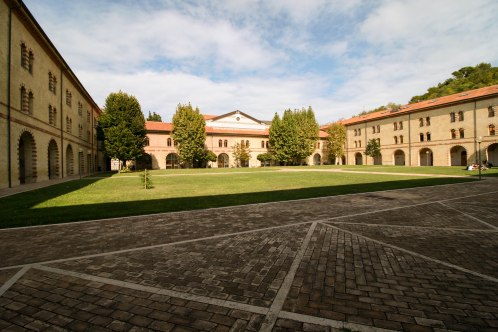
September saw the 9th edition of the European Business History Association’s biannual doctoral summer school, held in the Italian city of Ancona. This year I was fortunate to be attending myself and, having heard the endorsements of previous alumni, was looking forward to a week of stimulating content, some late summer sun, and of course the famous food of the Marche region. The summer school, in its third year in Ancona, was being hosted by the Università Politecnica delle Marche, whose picturesque Economics department was to be our home for the week.
Facoltà di Economia, Ancona
Along with their annual congress, the school constitutes the EBHA’s main effort in their aim to develop the academic discipline of business history. The school seeks to attract talented junior historians and social scientists to the broad scope of business history, encouraging further study of the history of organizations, markets and the people impacted by them. The school, fundamentally international in nature, has developed a reputation for facilitating long lasting friendships within the field and providing a safe, friendly, but ultimately rigorous atmosphere within which to promote and engage with doctoral research.
After introductions, the school was opened by Andrea Schneider, who lead a session on heritage and storytelling through the lens of German corporate history. In dealing with these concepts, we discussed their diverse uses and features, not only amongst researchers but also by companies themselves. We finished by deliberating some of the ongoing challenges and opportunities of business historic research, particularly in relation to digitalization and the changing nature of sources. We then had a thought-provoking presentation from Grietjie Verhoef on business history within Africa, discussing the challenges of the Chandlerian perspective within the context of Africa, as well as the continent’s distinct development trajectory and the factors that impact upon it. We finished by identifying some key aspects of business in Africa, along with possible research agendas for the future.
Harold James initiated proceedings on the second day with a lecture on the nature of capitalism. Here, he engaged in a stimulating analysis of the dominant perspectives of capitalism, as well as a number of assumptions and institutions we’ve come to take for granted. After lunch, Abe de Jong ran a session on business history methods, which developed on our own uses of business history to show the diverse schema of motivations and contexts within which it’s pursued. Through a process of categorizing personal statements about our work, Abe argued that at least five distinct types of business history research existed within the school’s cohort alone! Following this, the faculty ran an informative and lively round table on publishing, which covered the various roles, processes and traditions that exist within the journal environment.
The third day was opened with a session on business history and management research, led by Ludovic Cailluet. Here, the focus was on understanding the differences between the mainstream of management research and that of business history, covering the expectations, characteristics, and preferences of both. Jeffrey Fear’s afternoon session on the integration of history and business in taught programmes provided a wider platform of discussing the teaching aspect of academic careers. He highlighted the value that can be gained by using historical cases within the management school curriculum, as well as concepts of a more economic or commercial nature within the history department. Andrea Colli finished the afternoon with a talk on multimedia case studies. Although widely inspiring, the audience was particularly impressed with his example of an in-house video production for a case study of Venice as a commercial center. Dinners were always a fine affair, but this evening was particularly special. Venturing out of Ancona en masse, we traveled up the hillside overlooking the Adriatic to a secluded and scenic restaurant, where a excellent meal was had by all.
Deviating from the chronology briefly, it would be remiss of me not to mention the student presentations, which formed much of the week’s schedule. I was personally very impressed, not only by the presentations themselves, but also the engaging discussions which consistently followed them. The reach and impact of business history is something that was been made especially clear to me over the week, and it was interesting to talk with students and faculty from outside the business school environment. Amongst the topics discussed: the history of the South African Stock Exchange, 20th Century Dutch ship building, and the Berlin inter-war fashion industry. This, however, notes just a few of the areas we covered, not to mention the diverse approaches to business history used in researching them. Talking to me after to summer school, EBHA president Ludovic Cailluet, said “ I really enjoyed the diversity of perspectives and the richness of research being developed by these PhD students as much as the informality of the interactions.”
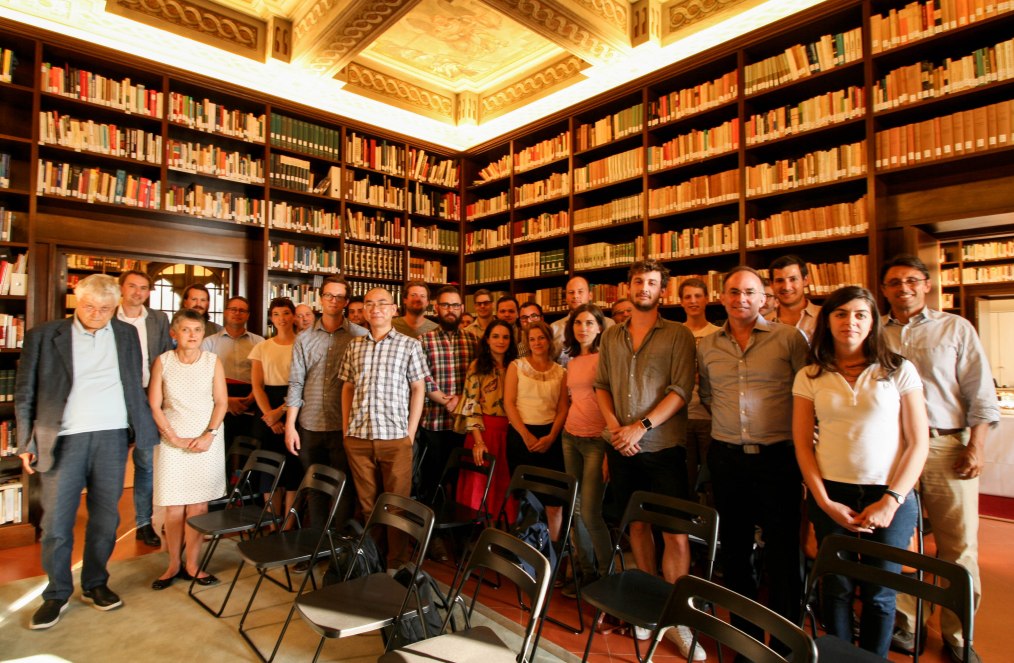
The final day started with a session from Marten Boon about geography and business history. Here, Marten drew on Cronon’s Nature’s Metropolis and the Chicago case to highlight the interrelationship between industrial clusters and the rural ‘nature’ we tend to juxtapose it with. He then provided a summary of his own work on the Rhine region’s oil infrastructure development, highlighting both his fascinating research and the innovative resources drawn upon in conducting it. On the final afternoon, we headed across town to the Biblioteca Amatori, where Franco Amatori gave an impactful talk on the nature of a history of capitalism. Following this, the students and faculty were treated to a reception at the Biblioteca to mark the culmination of the school’s 9th iteration. The discussions continued well into the evening, and eventually spilled out into the city’s Piazza del Plebiscito, where a convivial time was had discussing life, research, and much in-between.
Students and Faculty at Biblioteca Amatori
On behalf of all the students, I would like to thank the EBHA, the faculty, and the organizing team (particularly Veronica Binda and Roberto Giulianelli) for their investment in making this school such a success. Not only was it an incredibly valuable experience, but a hugely enjoyable one too. I am confident many friendships have been forged and that we, the students, will take much from the week into our research and wider careers.
Rolv Petter Amdam, BI Norwegian Business School, Oslo, Norway (rolv.p.amdam@bi.no)
Matthias Kipping, Schulich School of Business, Toronto, Canada (mkipping@schulich.york.ca)
Jacqueline McGlade, College of Economics and Political Science, Sultan Qaboos University, Muscat, Oman (jmcglade@squ.edu.om)
Call for papers
This special issue explores the dynamics, processes, and actors involved in making managers over time in a variety of contexts. The issue intends to fill an important gap in the current literature on the history of management education, which has largely been centered on organizational development narratives, i.e. the rise of business schools, the global spread of the American model, business-based academic disciplines, etc. (see, for examples, the Selected References below).
We therefore invite papers that to chronicle the actual preparation of managers in all types, venues and forms; address questions and perspectives that have not been addressed; and cover geographical areas or industries and activities that are not in focus in the extant literature. We seek contributions that consider a variety of dimensions and aspects involved with making managers, both in imagined and real terms. We welcome in particular contributions that address one or several of the following broad domains: (i) organizational settings, such as universities, companies, business associations, governments, public administrations and the military etc.; (ii) programs and their scope, including undergraduate and graduate degrees, executive education, managerial leadership programs, corporate training, online and self-help courses etc.; (iii) cultural and social processes, contributing, among others, to organizational integration, habitus building and elite formation; (iv) global differences, with a particular focus on non-Western contexts.
Possible (though not exclusive) topics
• The role of management education and training in imparting and inculcating shared terminology and language, norms and behavior;
The shifting weights of various academic disciplines in the preparation of managers as well as the changing importance of experiential learning;
The development of non-traditional manager preparation programs, including alternative contents and new ways of delivery;
The efforts by other actors to complement or substitute for extant university- based management degree programs;
The attempts by the various management education or training providers to bridge perceived gaps between business knowledge mastery, i.e. “know about” and impactful managerial leadership, i.e. “know-how.”
The influence of different national, cultural and institutional contexts on the formal or informal making of managers;
The emergence of a cadre of global managers, tied (or not) to multinational enterprises and related phenomena, including offshoring;
The homogenizing effects due to dominant models, accreditation or rankings, and how these have been resisted, subverted or adapted;
The ways in which education and training contributed (or not) to the expansion and professionalization of management.
Selected References
Amdam, R.P. (2008). “Business Education,” in G. Jones and J. Zeitlin, eds., The Oxford Handbook in Business History. Oxford: Oxford University Press.
Engwall, L., M. Kipping, and B. Üsdiken (2016). Defining Management: Business Schools, Consultants, Media. New York: Routledge.
Gourvish, T. R. and Tiratsoo, N., eds. (1998). Missionaries and Managers: American Influences on European Management Education, 1945-60. Manchester: Manchester University Press.
McGlade, J. (1998). “The big push: the export of American business education to Western Europe after World War II,” in V. Zamagni and L. Engwall, eds., Management education in a historical perspective. Manchester: Manchester University Press.
Mintzberg, H. (2004). Managers Not MBAs: A Hard Look at the Soft Practice of Managing and Management Development. San Francisco, CA: Berrett-Koehler Publishers.
Submission Process and Deadline
Authors wanting to discuss their ideas or draft papers are encouraged to contact the special issue editors. When writing the manuscript, please make sure to follow the journal’s style guidelines: http://www.tandfonline.com/action/authorSubmission?journalCode=rmor20&page =instructions#.U2-Oqi_6Tp0. Completed manuscripts should be submitted online at: http://mc.manuscriptcentral.com/moh, mentioning the special issue. The deadline for submissions is 31 March 2018.
Each submission will initially be reviewed by the guest editors to determine its suitability for the special issue. We might hold a paper development workshop for authors whose manuscripts pass this original screening. Before final acceptance papers will also be double-blind reviewed. Publication of the special issue is planned for the second half of 2019.
About the Editors
Rolv Petter Amdam is Professor of Business History at BI Norwegian Business School in Oslo, Norway. He has published widely on the international development of management education, and edited Management Education and Competitiveness: Europe, the US and Japan (1996), and co-edited with R. Kvålshaugen and E. Larsen, Inside the Business School: The Content of European Business Education (2003)
Matthias Kipping is Professor of Policy and Richard E. Waugh Chair in Business History at the Schulich School of Business, York University in Toronto, Canada. He has published extensively on the international dissemination of management knowledge, and in particular the role of consultants and business schools. He has co-edited, with T. Clark, the Oxford Handbook of Management Consulting (2012) and co-authored, with L. Engwall and B. Üsdiken, Defining Management (2016).
Jacqueline McGlade is Associate Professor at the College of Economics and Political Science, Sultan Qaboos University in Muscat, Oman. She has pioneered some of the early research on the US efforts to spread their models of management education globally – a topic she is continuing to explore, and is currently working on issues of international political economy and trade development, including, most recently, research on the role of SMEs in the Gulf region.


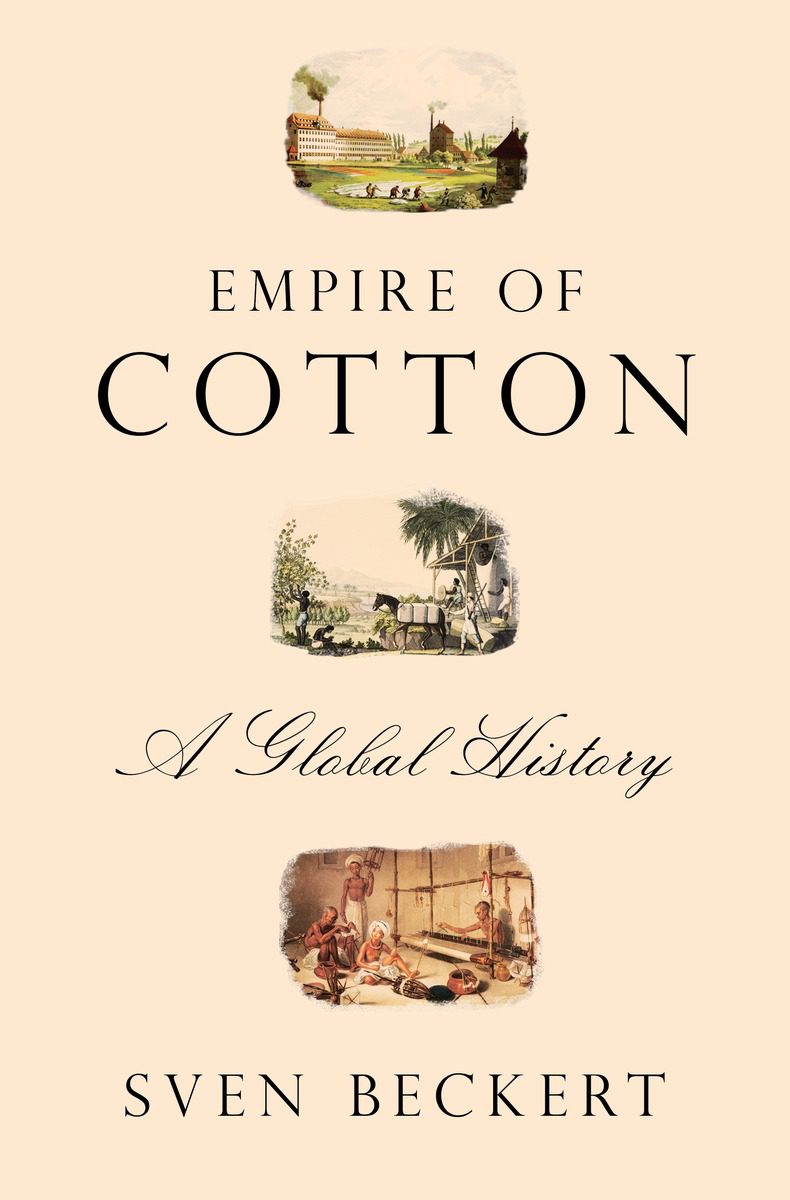 Sven Beckert places cotton at the center of his colossal history of modern capitalism, arguing that the growth of the industry was the “launching pad for the broader Industrial Revolution.” Beckert follows cotton through a staggering spatial and chronological scope. Spanning five thousand years of cotton’s history, with a particular focus on the seventeenth to twentieth centuries, Empire of Cotton is a tale of the spread of industrialization and the rise of modern global capitalism. Through emphasizing the international nature of the cotton industry, Beckert exemplifies how history of the commodity and global history are ideally suited to each other. Produced over the course of ten years and with a transnational breadth of archive material, Empire of Cotton is a bold, ambitious work that confronts challenges that many historians could only dream of attempting. The result is a popular history that is largely successful in attaining the desirable combination of being both rigorous and entertaining.



 Organizational History Network